

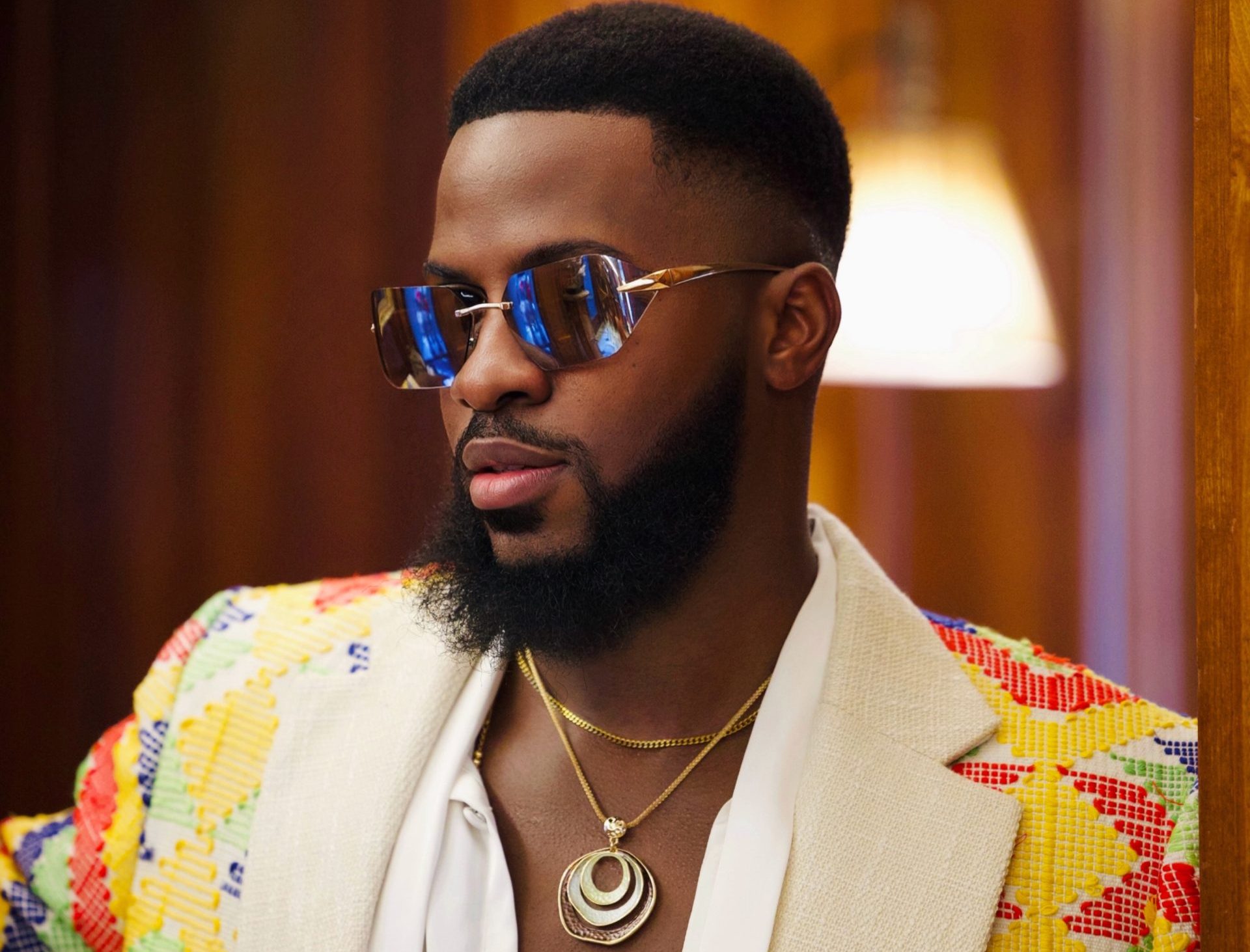
Akin Faminu doesn’t approach Paris Fashion Week like most attendees.
While many treat the streets outside shows as a stage for personal branding or trend-chasing, Faminu’s wardrobe choices suggest a more deliberate intention. His appearances at the 2026 edition of Paris Fashion Week are not just about style, they are about placement.
And more specifically, placing African designers within a global fashion conversation that has historically overlooked them.
So far this season, Faminu has delivered three distinct looks, each anchored by a different African brand, each communicating a different perspective on modern menswear.

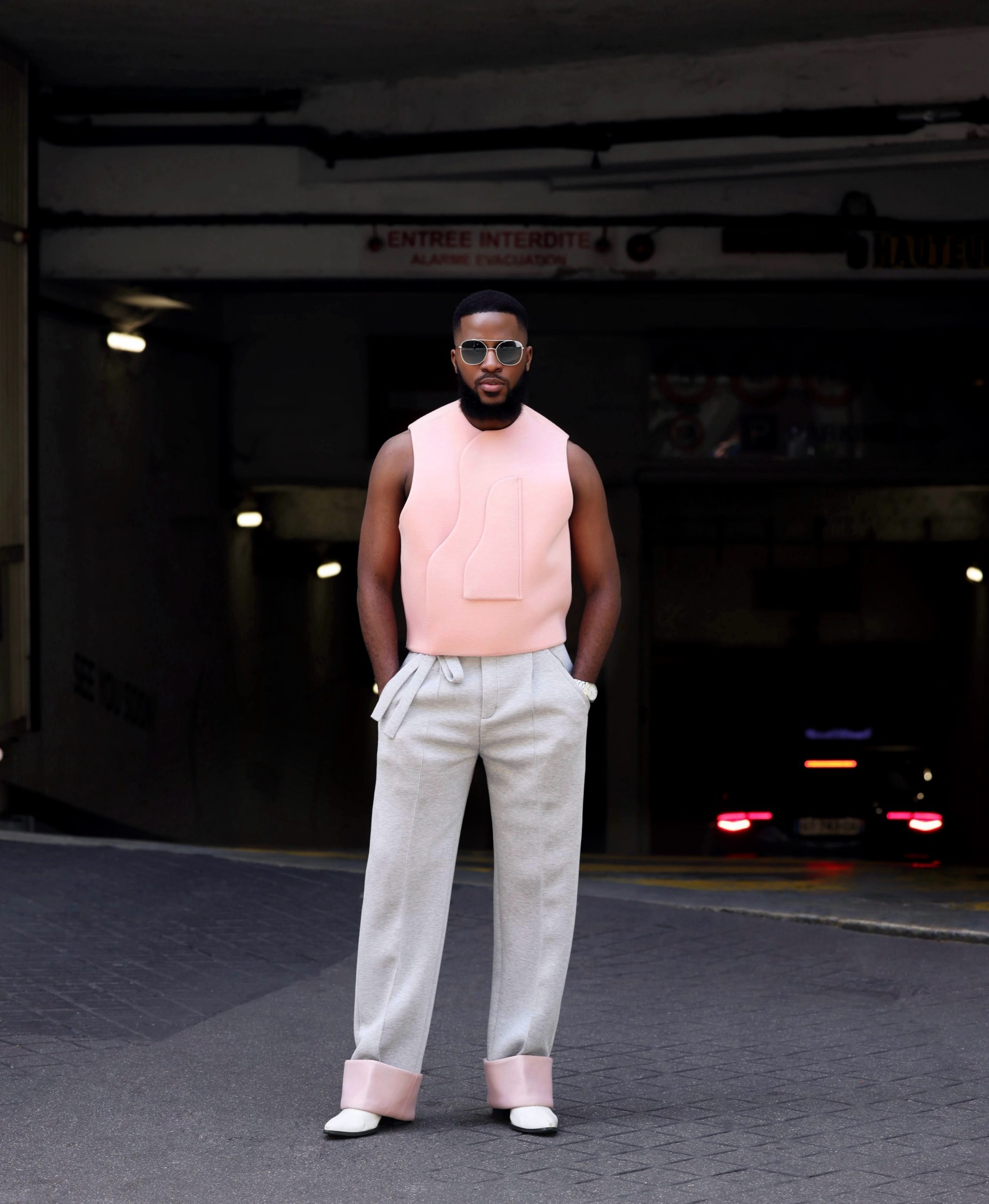
His first appearance, in TJWHO, leaned into soft minimalism. A blush pink sleeveless top paired with wide-leg grey trousers introduced a silhouette that felt both relaxed and architectural. The exaggerated pink cuffs added just enough disruption to keep the look from feeling predictable, while the clean styling kept the focus on proportion and form.
The second look shifted gears entirely.
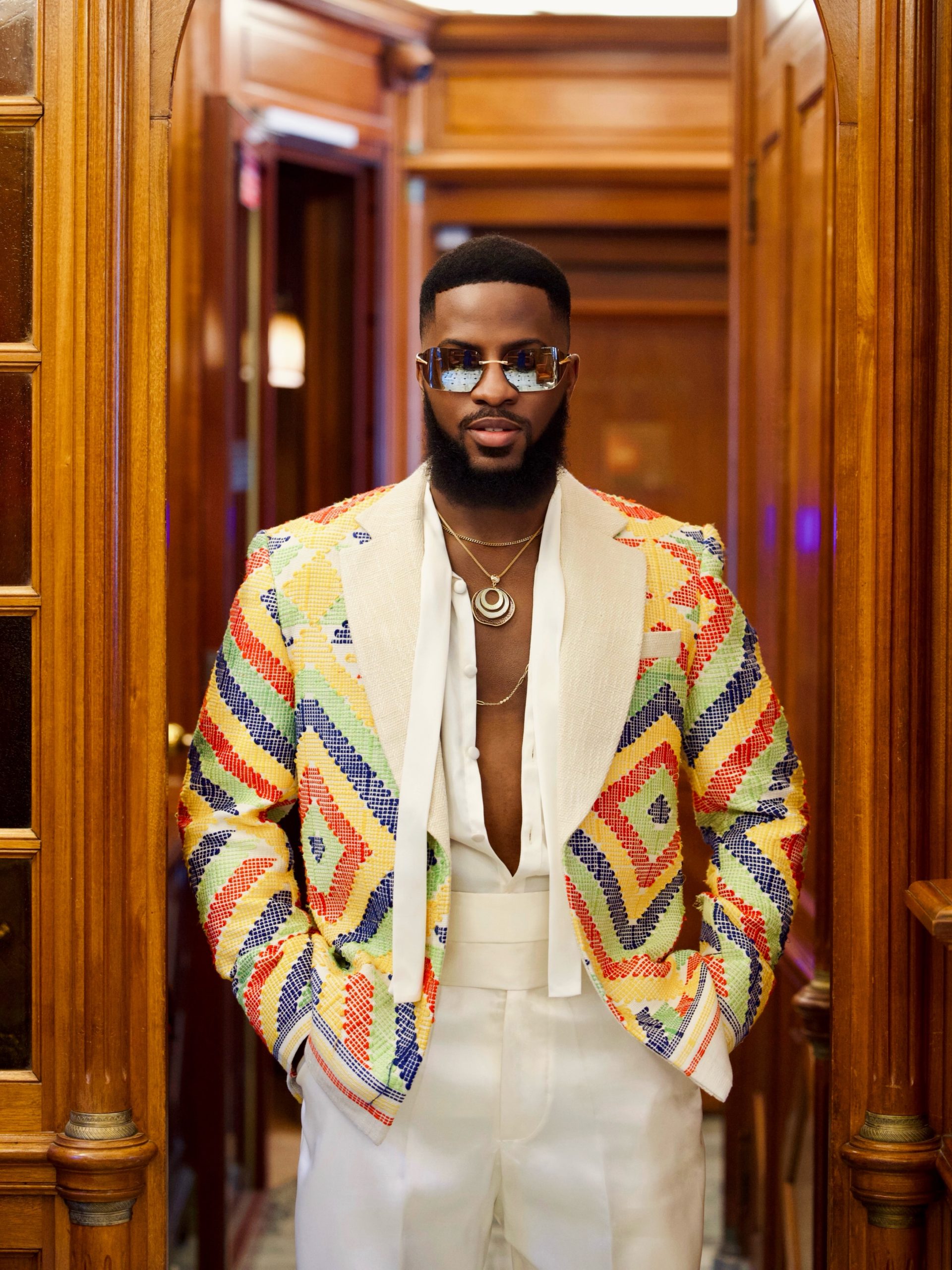
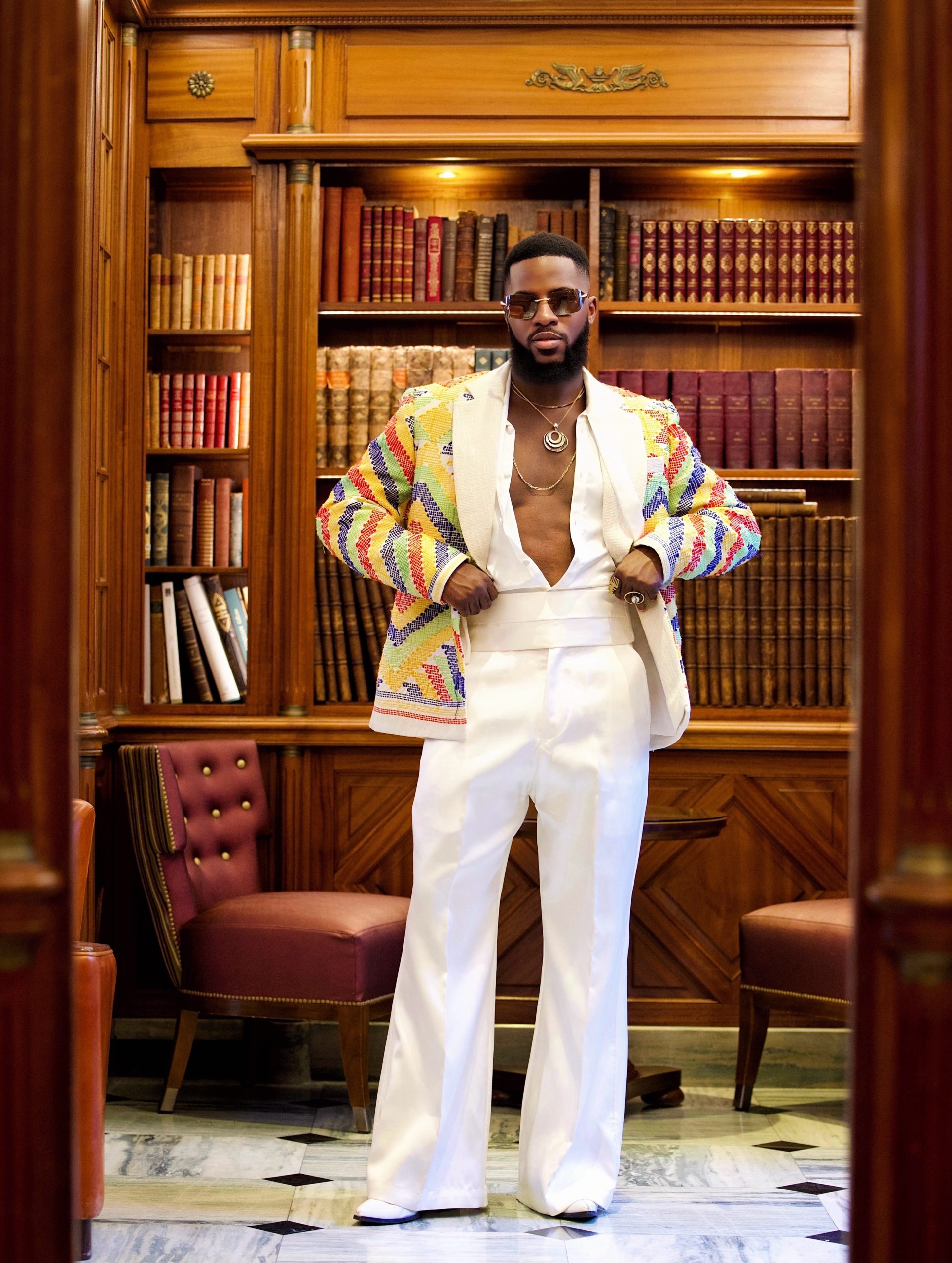
Wearing Emmy Kasbit, Faminu embraced texture, colour and layered storytelling. A multicoloured blazer became the focal point, styled with an open white shirt, gold jewellery and mirrored sunglasses. It was a look rooted in craft but styled with the ease of contemporary streetwear—bridging tradition and modernity without forcing the connection.
Then came the third look, arguably the most directional.
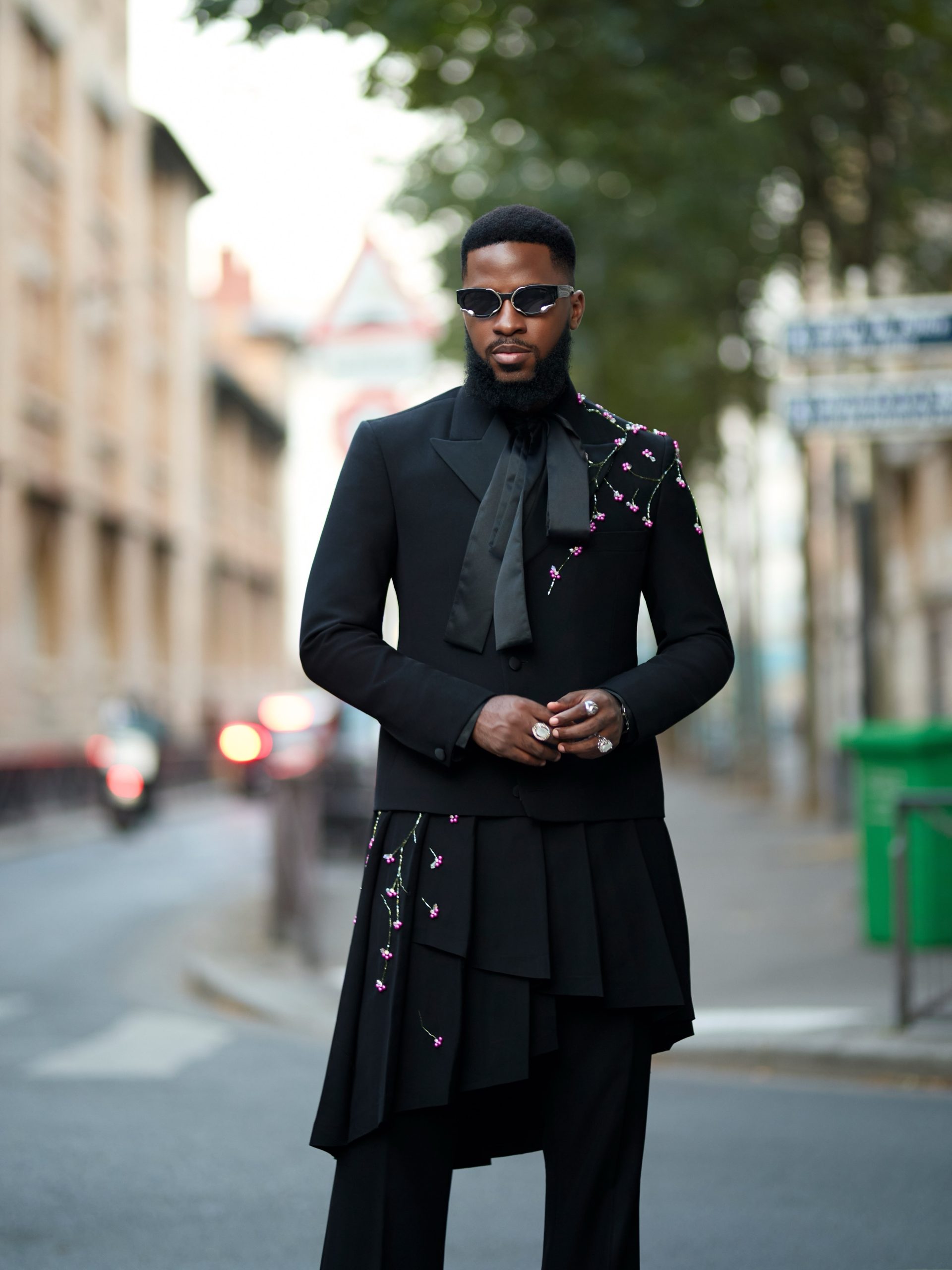
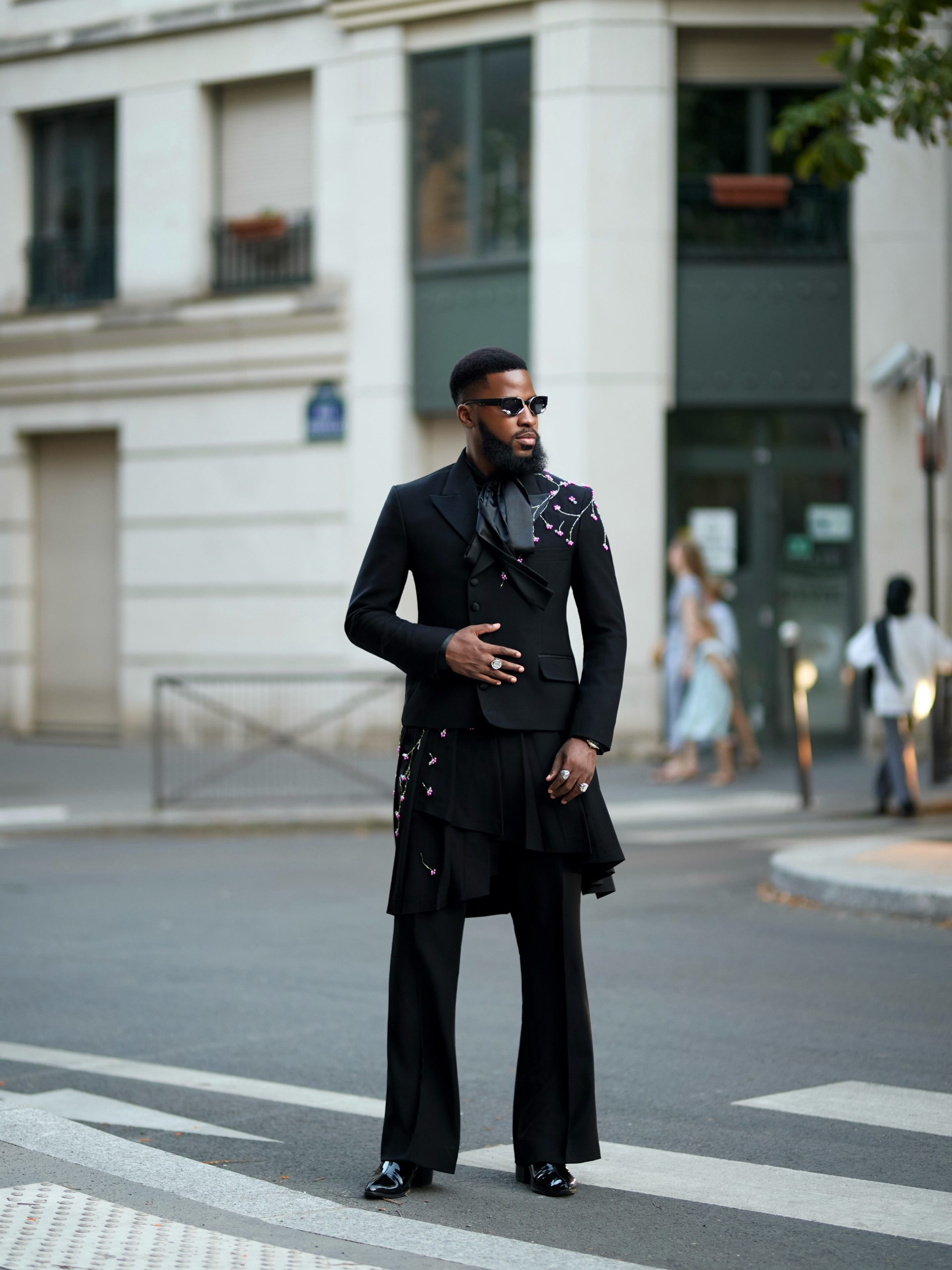
In OJ Clothing, Faminu stepped into a more experimental space. The all-black ensemble played with structure and silhouette, pairing sharp tailoring with a pleated, skirt-like base. Floral detailing at the shoulder and a fluid neck scarf introduced movement, proving that menswear can be both precise and expressive at once.
Individually, each look works. Collectively, they tell a larger story.
At a time when global fashion is increasingly looking toward Africa for inspiration, Faminu is offering something more valuable than trend adoption: context. By consistently wearing African designers in highly visible spaces like Paris Fashion Week, he is not just participating in fashion’s global ecosystem—he is actively reshaping it.
This is where his influence becomes particularly significant.
Street style has evolved into one of the most powerful tools in fashion communication. Images captured outside shows often travel further and faster than runway looks themselves. In that ecosystem, visibility is currency. And Faminu is choosing to spend that currency on designers who deserve a broader audience.
What makes his approach effective is its subtlety.
There is no forced narrative, no overt messaging. The looks speak for themselves. The tailoring, the textiles, the silhouettes, all communicate the depth and diversity of African fashion without needing explanation.
In doing so, Faminu positions himself not just as one of the best-dressed men at Paris Fashion Week, but as a key figure in a larger cultural shift.
Because in today’s fashion landscape, what you wear is never just about style.
It’s about who and what you choose to represent.



Comments are closed.