

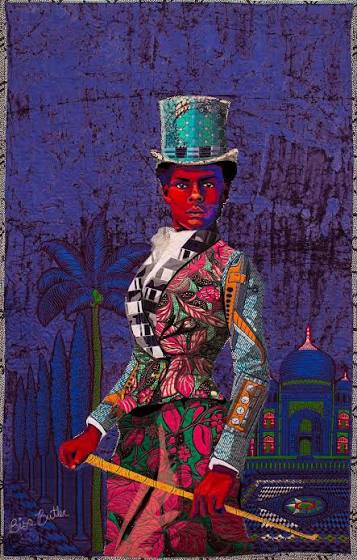
American textile artist Bisa Butler presents a portrait that explores identity, authority, and cultural expression. Through the use of colour, patterns, fabrics, and symbolic objects, Butler creates an image that goes beyond conventional portraiture. The work presents a man whose clothing, posture, and appearance communicate dignity, confidence, and cultural identity.
The use of colour is one of the most striking features of the work. The deep blues and purples of the background contrast with the bright reds, greens, pinks, and oranges of the subject’s clothing. These colours create a strong visual balance. The patterns on the clothing also attract attention through their variety and arrangement. The contrast between the colourful figure and the dark background makes the subject stand out.
The clothing is central to the composition. Butler combines floral patterns, geometric shapes, and different fabric textures to create a detailed surface. The arrangement of these materials reflects the traditional technique of quilting, in which different pieces of fabric are joined to form a complete image. Through this approach, Butler uses textile art as a means of portraiture. The clothing is not merely decorative; it forms an important part of the subject’s identity and visual presence.
The subject’s face provides balance within the colourful composition. His direct gaze and serious expression communicate confidence and composure. His face contrasts with the busy patterns of his clothing and draws the viewer’s attention. The subject maintains a firm posture, giving the portrait a strong sense of presence.
The hat and sword are also important elements of the work. The patterned hat adds height to the figure and strengthens his appearance. The sword, held diagonally across the lower part of the composition, creates movement and breaks the vertical arrangement of the figure. It also represents authority and power. Together, these objects contribute to the subject’s appearance and reinforce the formal character of the portrait.
The figure occupies the centre of the image and dominates the frame. His upright posture creates a sense of stability, while the diagonal position of the sword adds movement. The background contains architectural structures and vegetation, including a prominent domed building on the right. These elements establish the setting without drawing attention away from the subject. The arrangement maintains a clear relationship between the figure and the surrounding environment.
The background consists mainly of deep blue and purple tones. Its textured surface contrasts with the detailed patterns of the clothing. The architectural structures and vegetation provide additional visual interest and establish a sense of place. The darker background also makes the subject’s bright clothing more prominent.
The Equestrian demonstrates the use of quilting as a form of contemporary portraiture. Quilting is traditionally associated with domestic craft and textile production. Butler uses the medium to create detailed portraits that challenge the distinction between craft and fine art. Her work also draws attention to the cultural history and artistic value of fabric. The combination of different patterns and materials produces a unified image while preserving the individuality of each element.
The Equestrian succeeds through its use of colour, texture, composition, and textile techniques. The clothing, facial expression, posture, and background work together to create a unified image. Butler demonstrates that quilting can serve as a powerful medium for portraiture and cultural expression. The work presents identity and authority through visual form while giving textile art a prominent place in contemporary fine art.
The Equestrian, connects the work to the tradition of equestrian portraiture, which historically represents power, authority, and social status. Although the subject is not shown on a horse, his posture, clothing, hat, and sword establish a commanding presence. Butler uses these elements to present a Black subject within a tradition of formal and authoritative portraiture.

Comments are closed.