

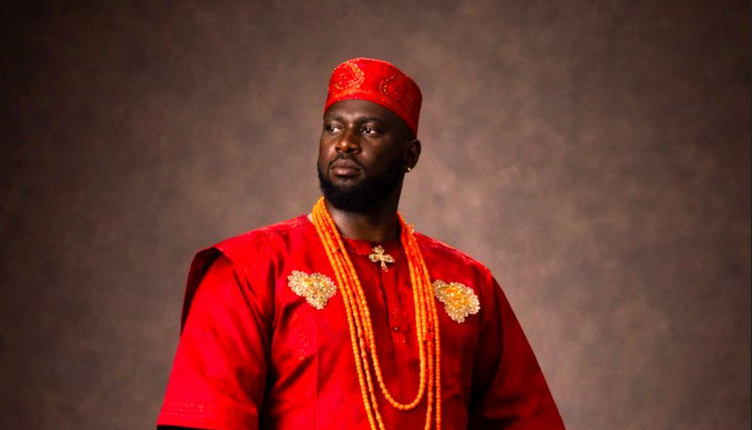
With Oghenevwe, Bright Urhobo presents a collection that is grounded in cultural authority and executed with deliberate restraint. The work does not seek approval through spectacle alone; instead, it asserts itself through symbolism, structure, and presence. The collection operates as a statement on lineage, masculinity, and ceremonial power within Urhobo culture, interpreted through a contemporary fashion-art lens.
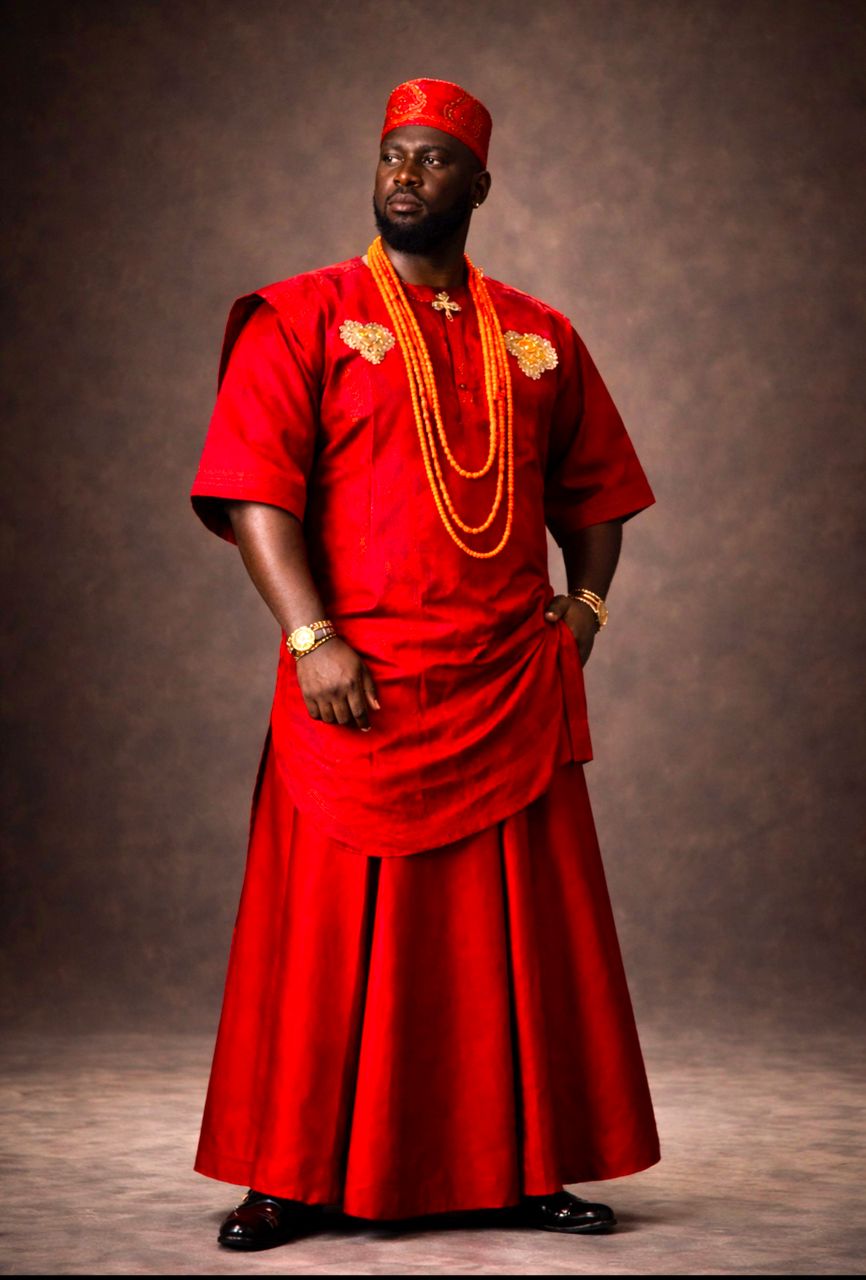
At its core, Oghenevwe is about dignity. The design structure are commanding without being aggressive, favoring clean, weighty forms that suggest status and composure. The garments sit heavily on the body, not as burden but as inheritance. This sense of gravity is one of the collection’s strongest achievements. Bright Urhobo understands that ceremonial fashion is not about excess movement or trend-driven flair, but about stillness, posture, and authority.
Material choices reinforce this intention. Rich fabrics in deep red tones are handled with discipline, allowing texture and construction to speak louder than surface decoration. Embellishments gold appliqué, coral beads, and metallic accessories are used sparingly and purposefully. They function as cultural markers rather than ornamental distractions. At times, the embellishment risks visual predictability, but its restraint prevents the collection from collapsing into costume.
The use of color is both unique and outstanding . Red, traditionally associated with power, leadership, and spiritual significance, dominates the collection and is allowed to remain uncompromised. Bright Urhobo resists the temptation to dilute the palette for commercial appeal, choosing instead to commit fully to its cultural meaning. This decision strengthens the collection’s conceptual clarity, even if it narrows visual variation.
The collection’s engagement with masculinity is particularly notable. Oghenevwe presents masculinity not as aggression or dominance, but as grounded authority. The styling staffs, beads, caps are not theatrical props but extensions of identity and rank. The garments frame the wearer as a custodian of tradition, suggesting continuity rather than performance. This approach feels intentional and mature, avoiding the over-stylization often seen in heritage inspired menswear.
Where Oghenevwe is less radical is in its willingness to challenge form. The collection favors refinement over disruption. While this strengthens its coherence and cultural respect, it also limits moments of surprise. The work feels confident and resolved, but not experimental. This is not necessarily a flaw; rather, it defines the collection’s position as one of preservation and elevation rather than reinvention.
For this collection he needs to work more on color balancing and detail defining to give the collection more cultural projection and pattern matching. In all it’s a good collection and I willl rate this a 8/10



Comments are closed.