


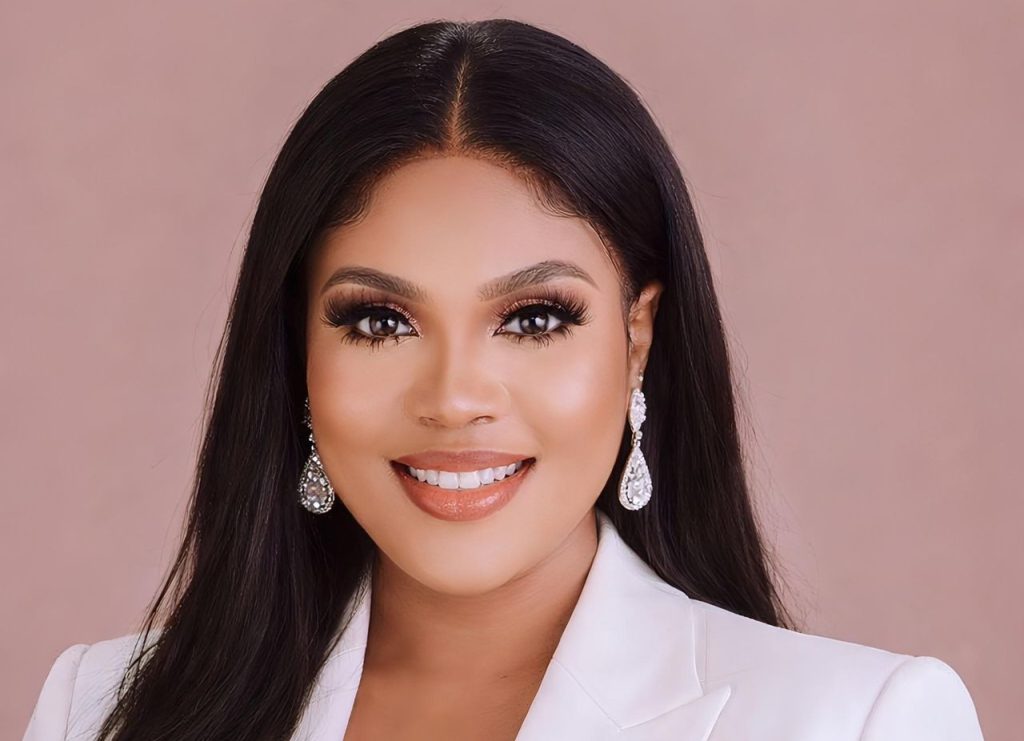
While some artists are made through institutions. Others through rebellion.
A few emerge through something quieter yet more enduring, and that is inheritance. Goodluck Jane belongs unmistakably to that last category. Jane was born into a family of painters and drawing artists, her earliest exposure to the art world started long before her classrooms encounter, it started in close proximity with those who inherently found expression in art. As such, observing how materials yielded to imagination, she understood that images could carry emotion long before words did. For such an environment, Art was no longer for spectacle, but a general atmosphere.
That early intimacy with visual storytelling would later mature into a multidisciplinary practice spanning painting, drawing, and mixed-media assemblage, a practice now widely recognised for its layered conversations between fabric, paper, pigment, and line.
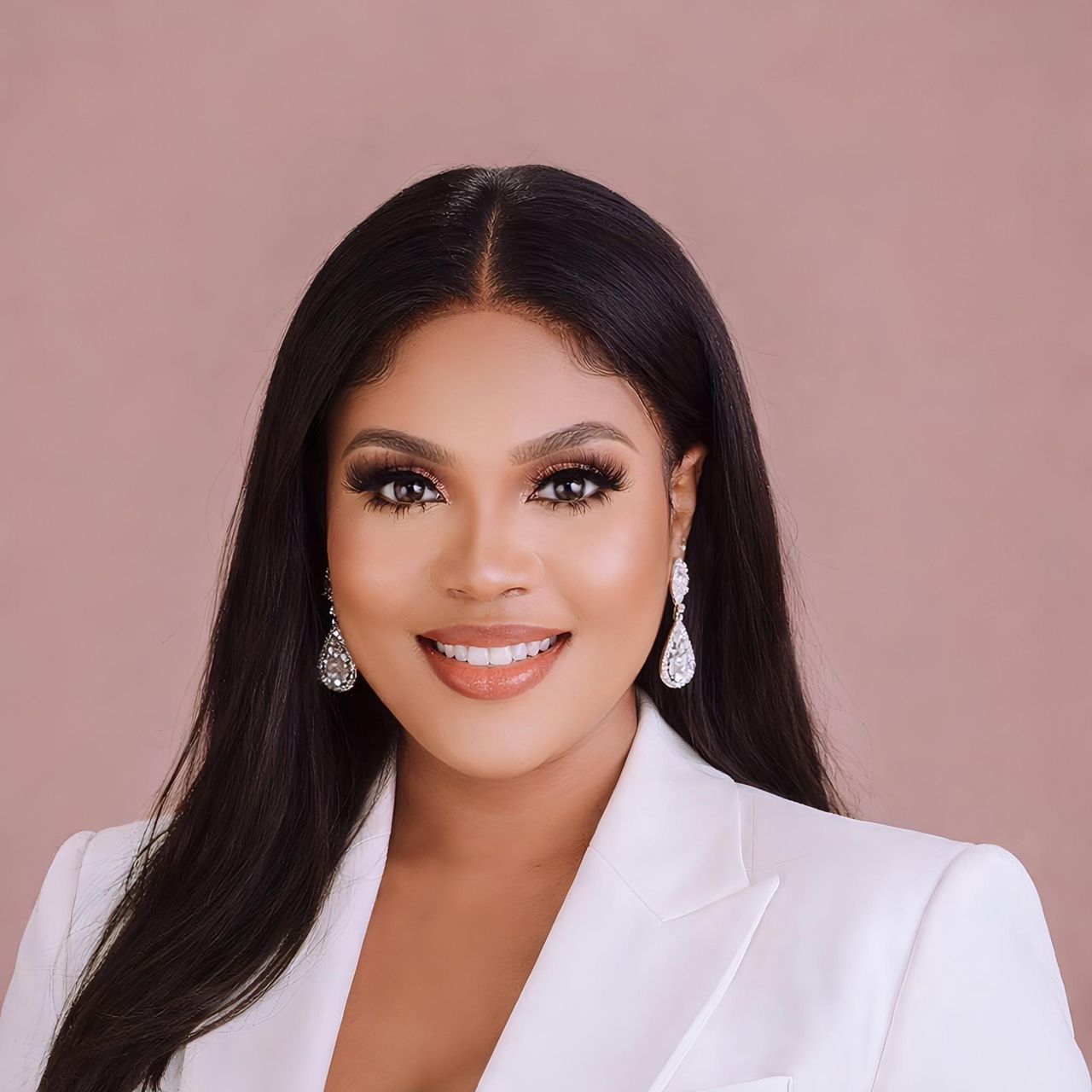
Jane began working professionally as a visual artist in 2021, yet her work carries the density of a much longer evolution. Perhaps this explains the speed with which her voice gained attention. There is little hesitancy in her compositions. They possess the confidence of someone who has long been listening. Central to her artistic language is the Ankara fabric which she treats not as embellishment, but as conceptual infrastructure. With a foundation in fashion design, Jane developed what might best be described as material intelligence: a sensitivity to how cloth behaves, how it holds colour, how it resists flattening, how it carries cultural memory. This fluency allows fabric, in her work, to function as language rather than surface.
Cut fabric silhouettes interrupt painted fields. Fractured patterns interfere with drawn gestures, while paper layers echo textile rhythms. The works assemble themselves like visual palimpsests, histories layered, identities negotiated, memories partially revealed.
Jane has exhibited her artwork across Nigeria and internationally, from “Bodies in Blue: An Ankara Study” at Zawyeh Gallery in Dubai, to “Bloodline in Bold Print” at Afriart Gallery in Kampala, to “Echoes in Wax and Skin” at Gallery 1957 in Ghana. Jane’s practice has persistently explored the dialogue between body, cloth, and memory.
Her later solo exhibitions including “Fabric of Our Stories” at The Africa Center (UK), “Ankara Stories” at the African American Atelier Gallery (USA), and “Clothed in Care” at Umoja Art Gallery (Uganda) further cemented her reputation as an artist capable of transforming textile into narrative architecture.
Recognition has followed organically too. Art historian Bolaji Campbell described her work as phenomenal. Professor Moyo Okediji noted its refined originality. Her practice has been critically engaged by Kunle Filani and peer-reviewed alongside leading contemporary artists by Professor Peju Layiwola. Yet beyond accolades, what distinguishes Jane’s work is its emotional intelligence. Despite the vibrancy of the Ankara fabric, historically associated with ceremony, celebration, visibility, her compositions often hold moments of introspection. Colours pulse, but they also pause.
Patterns energise, yet they are fractured, interrupted, destabilised. The effect is deeply human. Jane’s art does not romanticise heritage, rather it interrogates it. inhabits it and asks what it means to carry history in the body, in memory, and in material. Her impact extends beyond the studio.
In 2022, she collaborated with La Mode Disability Foundation, teaching persons with disabilities mixed-media practices, painting, drawing, cutting, affirming art as accessibility rather than exclusivity. In 2023, she was invited by the University of Ife to speak on “The Fragments of Art,” engaging young artists in critical reflection on materiality and meaning.
By 2025, her presence had entered broader cultural conversations. She contributed to the Lagos Cultural Weekend and participated in the ARTX Lagos through professional development dialogues with rising artists.
Goodluck Jane’s trajectory resists simplification. She is not merely a textile artist. Not simply a painter. And, not even only a mixed-media practitioner. She is a storyteller leveraging material to stitch memory into form, and cut identity into surface, while layering heritage into a contemporary visual language.