


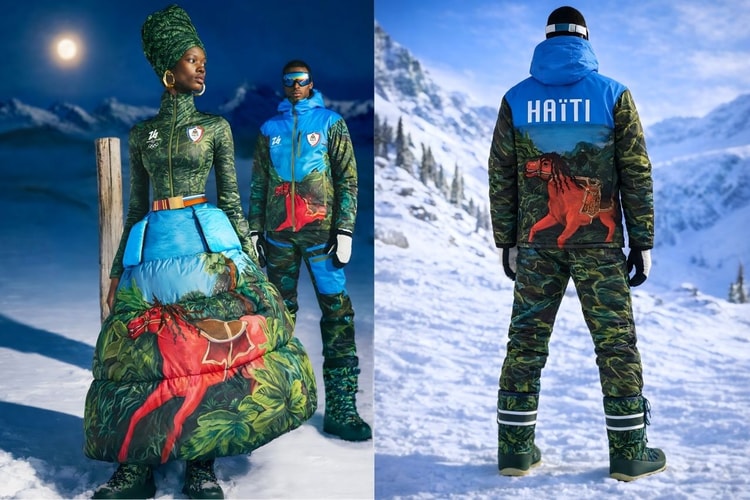
When most people picture the Winter Olympics, Haiti is rarely the first nation that comes to mind. Yet at Milano Cortina 2026, the Caribbean country has stepped onto the global stage with a debut that is impossible to ignore not only because of its presence, but because of the extraordinary artistry behind its uniforms.
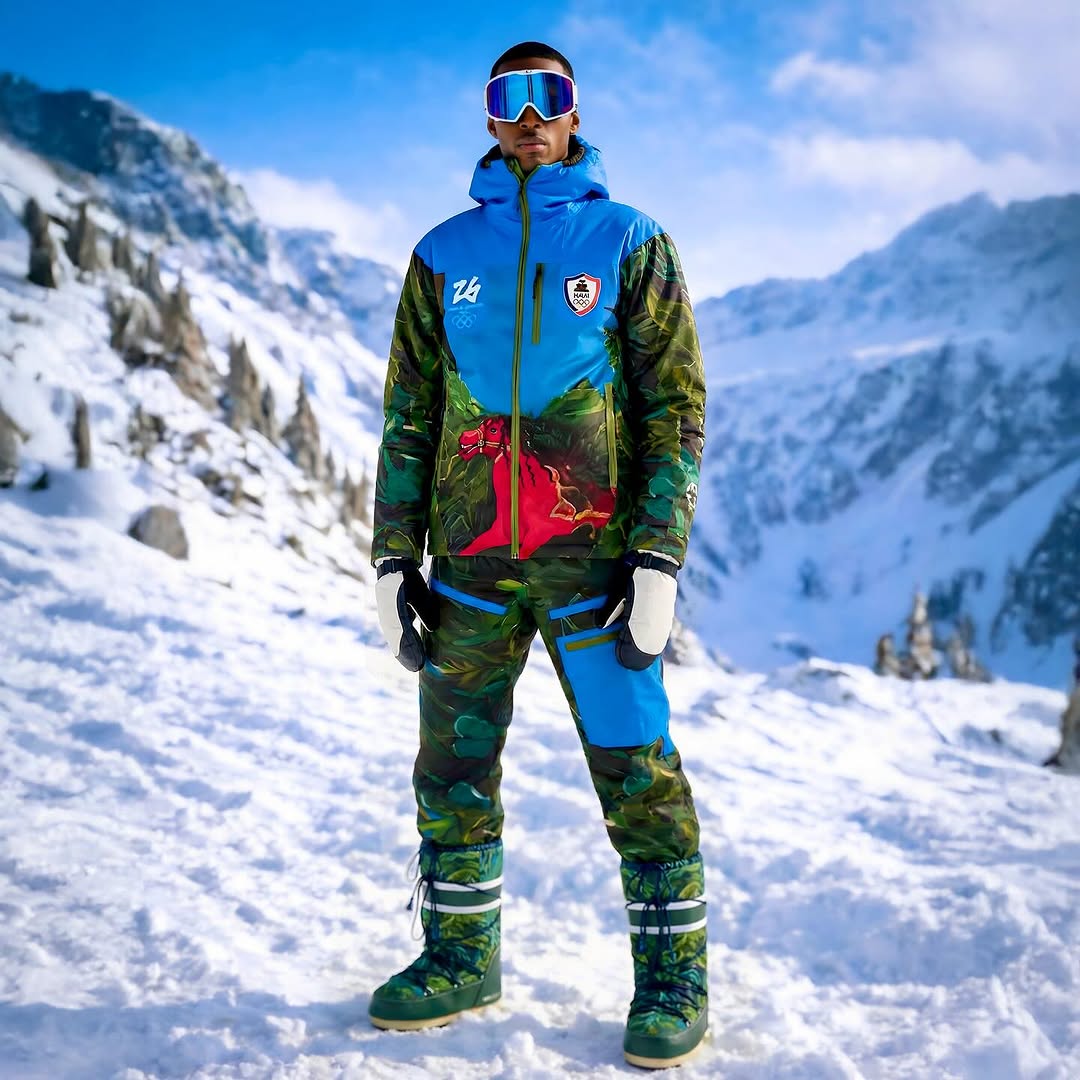
Represented by two athletes, skiers Richi Viano and Stevenson Savart, Haiti’s delegation may be small, but its cultural impact is immense. Instead of the typical neutral palettes often seen on winter slopes, the team arrived in a vibrant explosion of greens, blues, and reds, colours that honour Haitian heritage while standing boldly against the snowy backdrop of Italy.
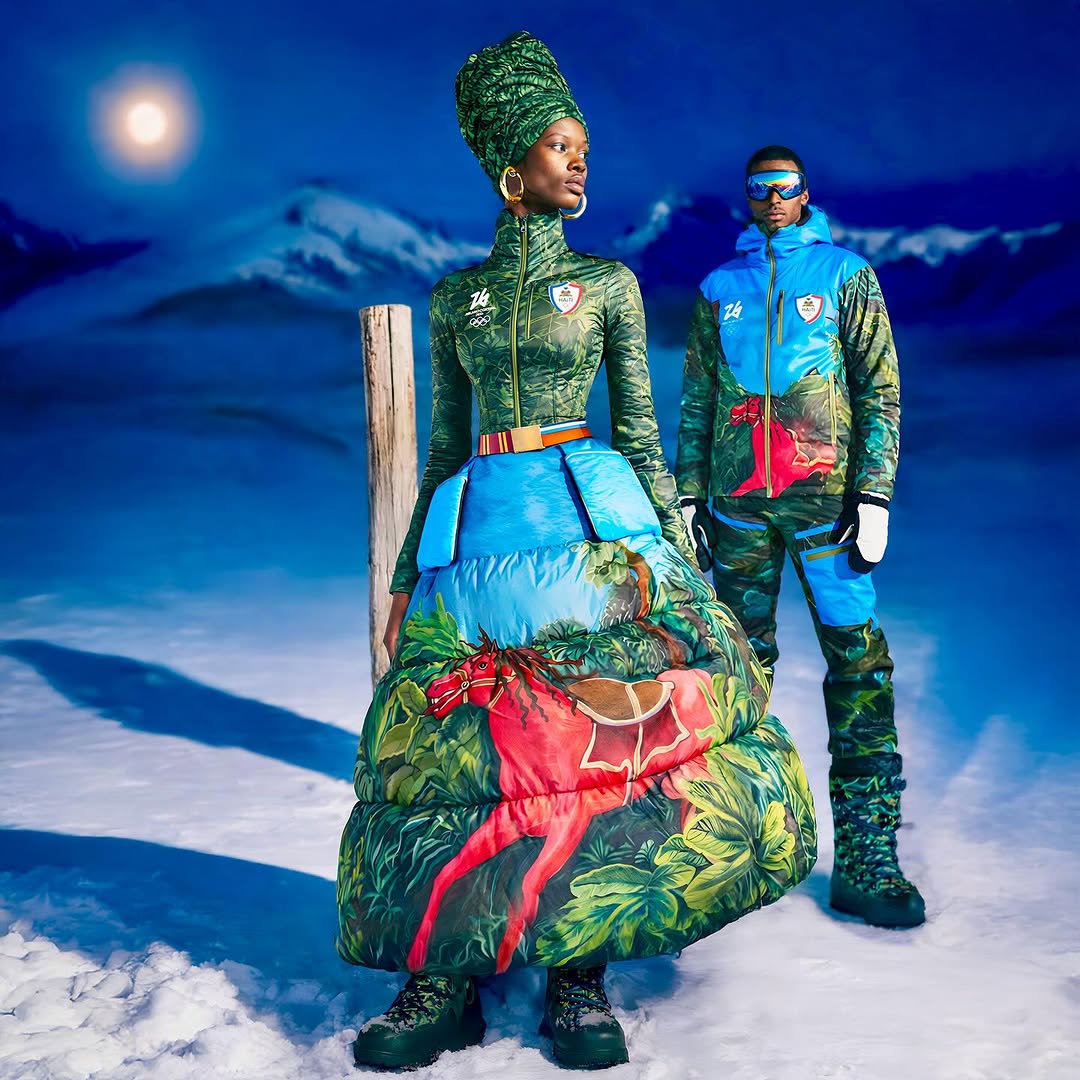
The striking designs were created by Stella Jean, working alongside former ski champion Pietro Vitalini, with inspiration drawn from renowned Haitian artist Edouard Duval-Carrié. Each uniform is hand-painted, making Haiti the only nation at the Games to wear fully hand-painted Olympic attire, a powerful fusion of sport, fashion, and fine art.
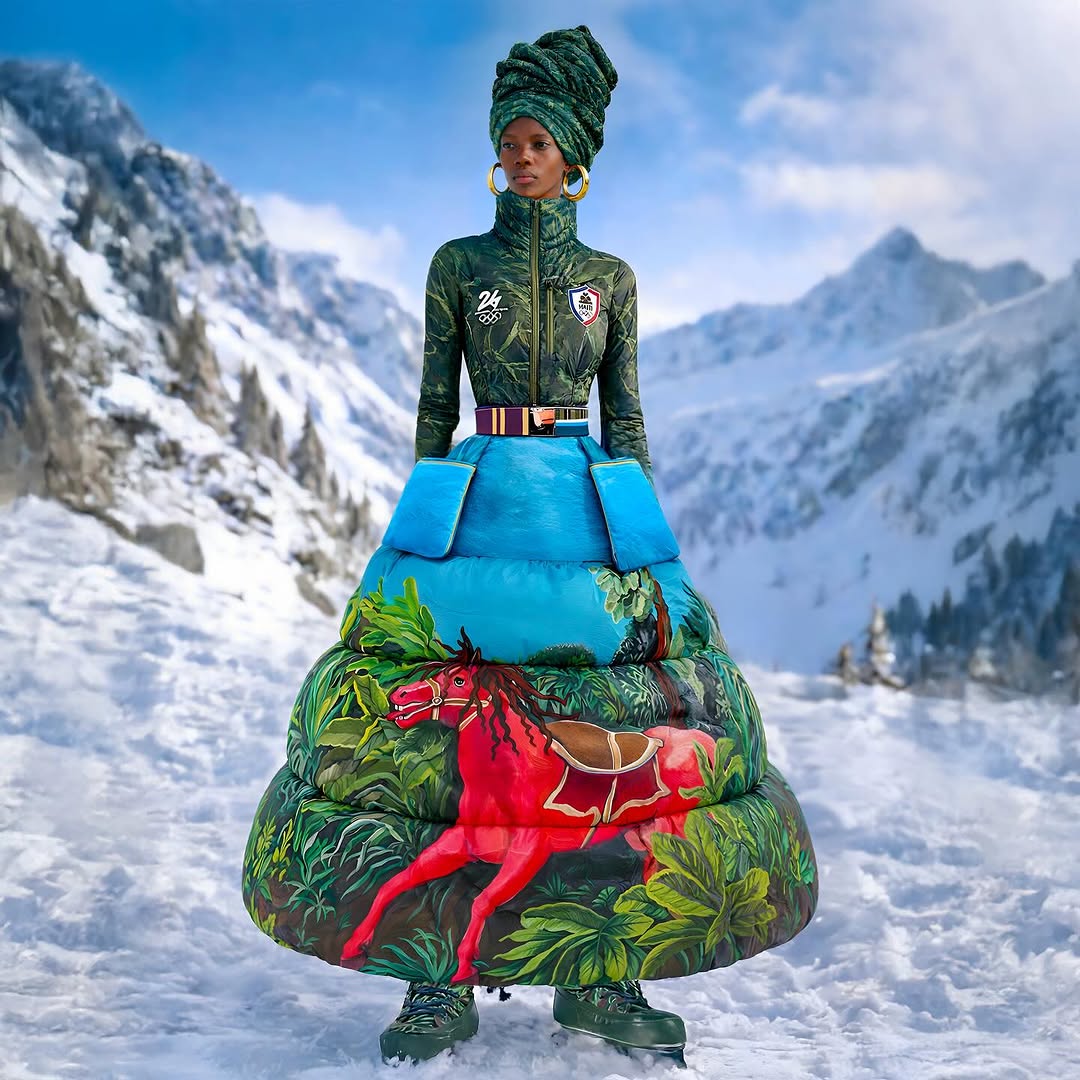
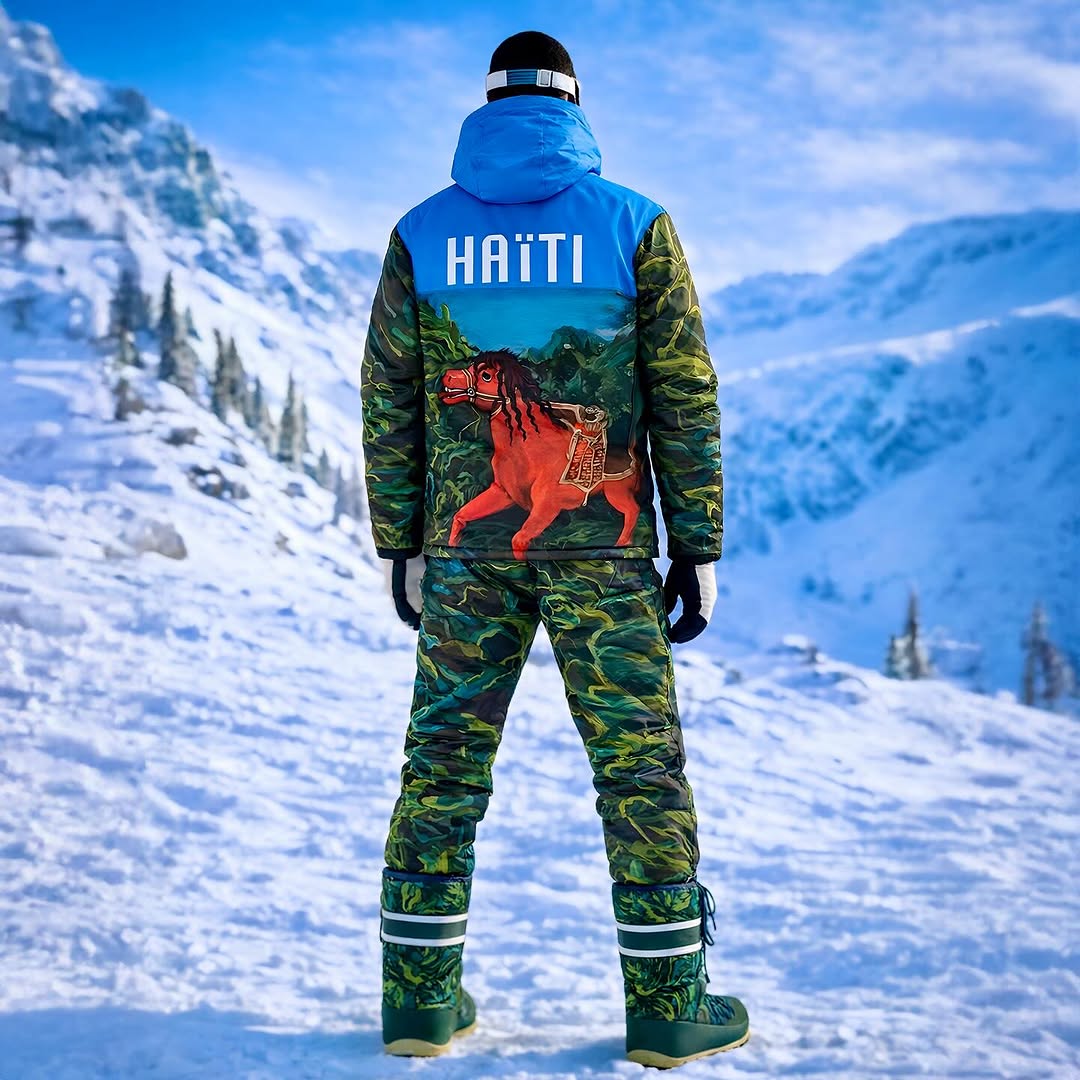
Behind the final visuals lies a layered story. Early versions of the design featured the revolutionary leader Toussaint Louverture, but after the International Olympic Committee flagged the portrait as too political, the design was reworked. The figure was painted over, leaving instead a riderless red horse galloping through a lush tropical landscape, a symbolic image that still carries echoes of history, resilience, and movement.
The women’s uniform merges athletic performance with couture sensibility: a structured green performance jacket paired with a flowing tiered skirt featuring the vivid painted landscape, styled with a traditional Haitian tignon headwrap and gold hoop earrings. The men’s uniform translates the same motifs onto a classic ski jacket and trousers, blending function with storytelling through colour and brushwork.
Haiti’s debut is not only about competing in winter sport; it is about visibility. As Haiti’s ambassador to Italy, Gandy Thomas, noted, participation itself is a statement, a refusal to be defined by geography, climate, or expectation. Designer Stella Jean echoed this sentiment, emphasizing that while nations may differ in resources, creativity remains a form of power no crisis can erase.
On the slopes of Milano Cortina, Haiti has arrived not quietly, but vividly reminding the world that sometimes the most memorable Olympic moments are not measured in medals, but in presence, identity, and the courage to show up differently.