

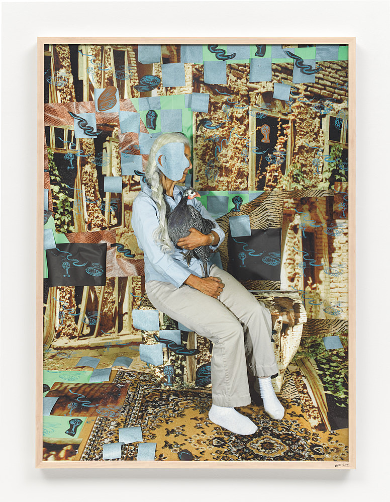
In Noon-o-namak (Bread and Salt) (2021), Sheida Soleimani presents a seated female figure surrounded by a complex arrangement of images, patterns and objects. The work combines photography, collage and constructed imagery to create a layered composition. The central figure wears light-coloured clothing and holds an object close to her chest, while the surrounding background contains fragmented architectural details, decorative patterns and repeated visual forms.
The seated figure occupies the centre of the composition. Her body is positioned at an angle, with her legs extending towards the lower right. Her face appears turned away from the viewer, making her identity less accessible through facial expression. This treatment shifts attention towards her posture, clothing and relationship with the surrounding space. The figure’s pale clothing also separates her from the heavily patterned background.
The background is made up of several overlapping sections. Images of buildings, architectural surfaces, plants and decorative patterns appear alongside rectangular blocks of colour. These elements create a fragmented visual arrangement rather than a single continuous setting. The mixture of images gives the work a collage-like structure, with each section contributing a different texture and visual detail.
Colour plays an important role in the composition. Shades of brown, gold, turquoise, green and black dominate the background. The warmer tones create a strong contrast with the cooler blue and green sections. The white and grey clothing of the central figure provides another contrast, making her stand out from the surrounding imagery. The repeated use of these colours also connects the different sections of the composition.
The arrangement of patterns creates movement across the work. Curved lines, architectural details, textured surfaces and rectangular shapes interrupt one another throughout the background. Some sections contain dense visual information, while others have simpler surfaces. This difference in detail creates an uneven visual rhythm and prevents the background from appearing uniform.
The relationship between the figure and the background is central to the composition. The seated woman appears calm and still, while the surrounding images are visually busy. This contrast creates a difference between the figure’s posture and the activity of the background. Her position also provides a point of stability within the fragmented arrangement, allowing the viewer to distinguish the central subject from the surrounding details.
The object held against the figure’s chest introduces another point of interest. Its position draws attention to the relationship between the figure and the object, although its exact meaning cannot be established from the image alone. The absence of a clearly visible facial expression also leaves the viewer to consider the figure through her physical position and the objects surrounding her.
Soleimani uses collage, colour, pattern and photographic imagery to construct a composition that brings different visual elements together. The central figure provides structure, while the fragmented background introduces changes in texture, scale and perspective. Noon-o-namak (Bread and Salt) examines the relationship between the human figure and constructed surroundings, using layered imagery to create a work in which identity, space and visual memory remain closely connected.