


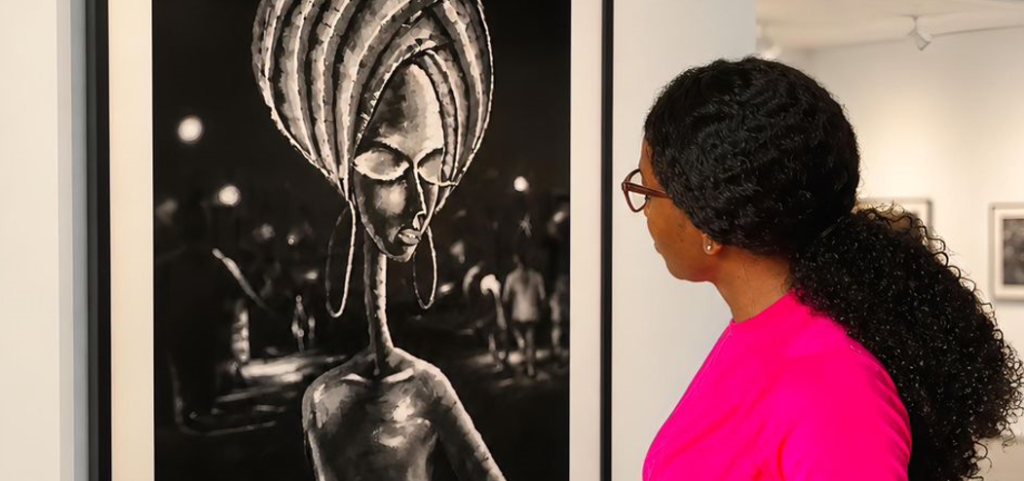
An exhibition is not a display, but a declaration. The choice of what to show, where to
show it, and when are not just logistical decisions, rather, they are a statement and an
argument. And an artist’s exhibition history, read carefully, tells you not just what they
have made but what they believe the world needs to receive.
Most people encounter an artist’s exhibition record as a list. Dates, venues, titles,
locations, the skeletal administrative record of a practice. Read that way, it tells you very
little. It tells you where someone was and when. It does not tell you why, neither does it
tell you what the choice of Oghara over Lagos meant, or what it cost to bring a full body
of work to London without softening a single frame, or what it means that a
photographer five years into a professional practice has shown her work on four
continents and in every significant region of her own country.
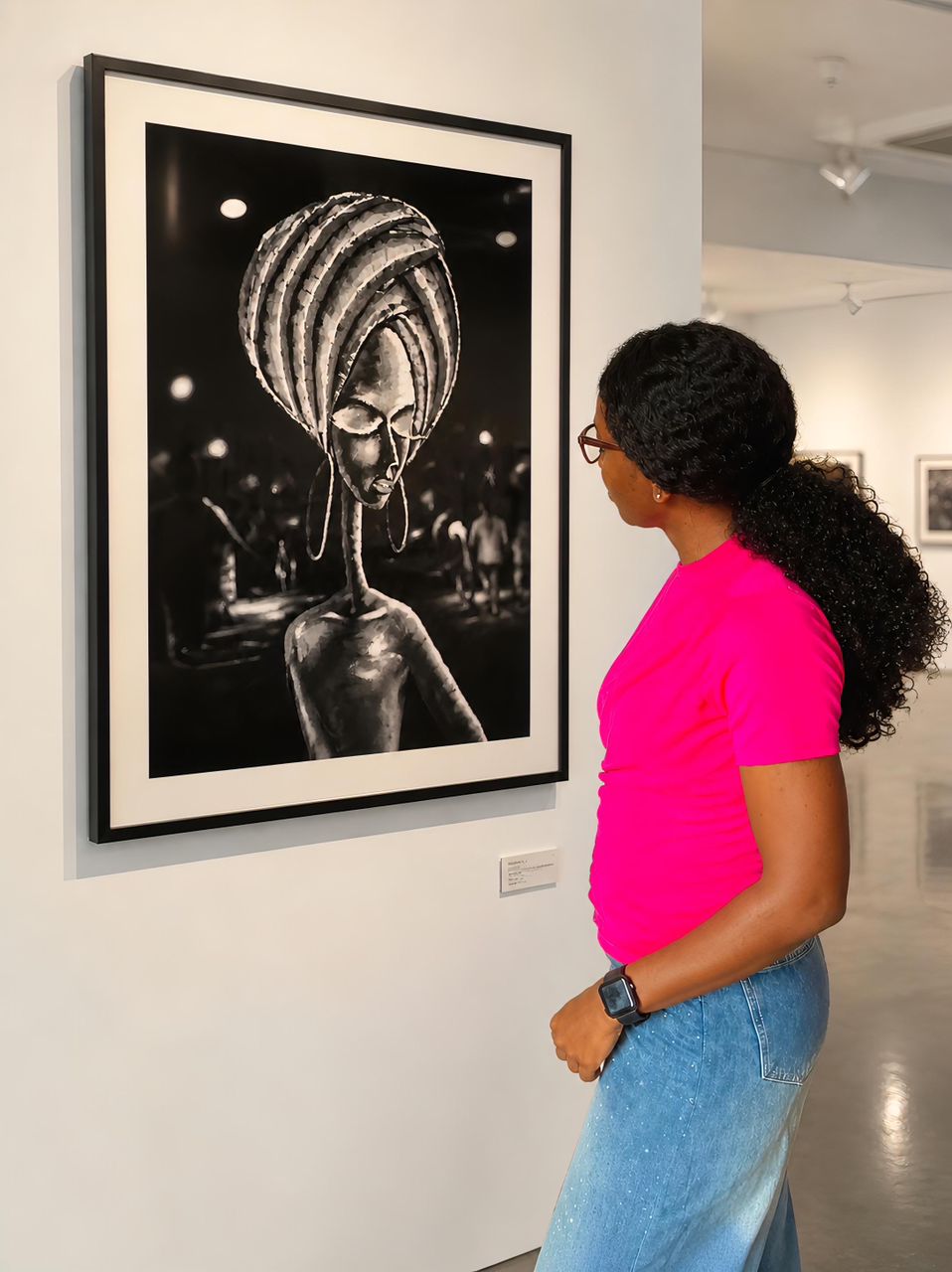
You have to read Deborah Abosede Ibeme’s exhibition history as the argument it
actually is in order to understand each show not as a career milestone but as a
deliberate act of cultural placement. That understanding reveals something essential
about the intelligence behind the practice, as she does not exhibit randomly or
opportunistically. She exhibits with intention. Every room she has chosen to enter has
been chosen because entering it said something specific that she needed said, in that
place, at that time, and to that audience.
The exhibition record, read this way, is itself a work of art. It has a shape and a thesis. It
has been built with the same deliberateness that she brings to every frame she selects
from the hundreds she does not.
2021: The Digital Opening
Digital Contemporary Photography Showcase — Uganda (Virtual Exhibition,
December 2021)
Her public exhibition life begins in a screen, a virtual showcase hosted in Uganda that
placed her emerging practice within a pan-African digital creative community at the very
moment when the pandemic had forced the art world to reckon seriously with digital
exhibition as a legitimate rather than a compensatory format.
This is worth noting not because the exhibition was her most significant but because of
what the choice of participation revealed: from the very beginning, Deborah understood
that the geography of visibility is not limited to physical rooms. The virtual exhibition was
not a fallback for someone who could not yet access gallery walls. It was an entry point
into a continental conversation, a way of establishing, before the physical exhibitions
began, that her practice was already in dialogue with a broader African creative
ecosystem.
The Rising Talent Recognition from the Niger-Delta Creative Arts Platform the same
year confirmed that the regional creative community had already identified her as
someone to watch. The recognition and the exhibition together mark 2021 as the year
the practice announced itself in digital space, with the patience of someone who
understood that the foundation matters more than the speed of the build.
2022: The Year She Walked Into the Room
New African Voices — Nairobi, Kenya (Group Exhibition, August 2022)
“Where Ancestors Still Breathe” — Nike Art Gallery, Lagos (Solo Exhibition,
March 2022)
She had two exhibitions in 2022, one physical solo, the other an international group
show.
“Where Ancestors Still Breathe” at the Nike Art Gallery in Lagos was, by any honest
measure, an audacious debut. Nike Art Gallery is not a space that accommodates
mediocrity or rewards ambition that exceeds ability. It is one of Nigeria’s most serious
cultural institutions, a place with a history of presenting significant work by artists whose
practices have defined Nigerian fine art across generations. For a photographer in only
her second year of professional work to mount a solo exhibition there was definitely
more than just a simple achievement, much more like a statement of earned presence
rather than a premature exposure.
The title of the exhibition itself is drawn from the cosmological reality of Niger Delta
spiritual tradition, its works examining the living, breathing presence of ancestral
consciousness in contemporary African life. It established the philosophical territory that
all subsequent series would navigate and deepen. Viewers encountered something they
had not anticipated: not emerging work finding its footing but fully formed work in
confident possession of its own language. The response was the particular kind of
stillness that precedes genuine recognition, more like the moment before words arrive,
when the body has already understood something the mind is still catching up to.
“New African Voices” in Nairobi the same year placed her practice in its continental
context for the first time, situating the Niger Delta visual vocabulary within the broader
landscape of contemporary African creative production and establishing, through
participation, that what she was building was not a local practice with national ambitions
but a nationally rooted practice with continental ones.
The UBA Merit Award for Creative Conceptual Portraiture, also received in 2022,
completed the year’s picture: critical institutional recognition in Nigeria, international
group exhibition presence in East Africa, and a solo debut that would have satisfied
most artists as the culmination of a long career’s work. She was in her second year.
2023: Returning to Ground, Reaching Further
“Threads of the Unspoken” — Onobrak Art Centre, Ughelli, Delta State (Solo
Exhibition, August 2023)
Afrocentric Perspectives — New York, USA (Group Exhibition, July 2023)
Visual Storytelling Africa — Lagos, Nigeria (Art Showcase, November 2023)
The geography of 2023 is deliberately wide and deliberately specific simultaneously.
New York in July. Ughelli in August. Lagos in November. The sequence from
international megacity to Delta State town to Nigerian commercial capital is the year she
established, through physical practice that her exhibition circuit was going to operate on
her own terms rather than the industry’s default assumptions about which rooms matter
and which ones don’t.
Ughelli is not a city that appears frequently in discussions of Nigerian fine art. It does
not have the gallery density of Lagos or the institutional weight of Abuja. It is a Delta
State city with a specific character and a specific community, the community whose
cultural heritage Deborah’s work is, in significant part, documenting and honoring. To
bring “Threads of the Unspoken” to Onobrak Art Centre in Ughelli after showing in the
United States was not a step backward on a conventional career ladder was the
execution of a philosophy: that the most important rooms are not always the most
prestigious ones, and that the work owes its first and deepest allegiance to the people
and places it is about.
“Threads of the Unspoken” examined the things that are communicated without speech
such as the knowledge carried in fabric, in gesture, in the specific way a woman
occupies her body in different contexts. The title’s “unspoken” is a double reference: the
stories that women carry silently and the cultural knowledge that is transmitted through
practice rather than language. Showing this work in Ughelli in the Delta, in the
community where this specific kind of unspoken knowledge is most alive, was to return
the conversation to its origin. To say: this work came from here. It is, first, for here.
The National Emerging Artist Award shortlist at Studio24, Lagos, the same year offered
an institutional confirmation that sits interestingly alongside the Ughelli exhibition: the
industry’s formal recognition of her as a significant emerging voice arrived in the same
year that she demonstrated her willingness to prioritize significance over prestige in her
exhibition choices. The two together reveal the artist in full, serious enough to be
shortlisted nationally, grounded enough to put Ughelli before the cities that would have
looked better on the exhibition record.
2024: The Most Consequential Year
“Sacred Flesh, Silent Stories” — TessArt Gallery, Asaba, Delta State (Solo
Exhibition, May 2024)
Voices of Identity — Ghana (Group Exhibition, June 2024)
Emerging Visions in Fine Art Photography — Dubai (Group Exhibition, September
2024)
“Fragments of Her Becoming” — CasildART Gallery, London, UK (Solo Exhibition,
November 2024)
If a single year had to be identified as the hinge point in Deborah Abosede Ibeme’s
exhibition history. 2024 is that year that definitively separated what came before from
what comes after
It contains everything the practice had been building toward: Delta State depth, West
African continental reach, Middle Eastern international presence, and a UK debut that
announced her arrival on the global stage with a clarity and authority that the preceding
years had been building upon.
“Sacred Flesh, Silent Stories” in Asaba in May was the year’s first major statement.
Asaba carries a specific and heavy historical weight in the Nigerian consciousness. It is
a city that knows what it means for bodies to carry stories that official history has not
always been willing to tell. To bring an exhibition about the African woman’s body as a
site of cultural memory and silent narrative to this specific city was to engage, even
without explicit statement, with the deepest questions the city itself holds about memory,
body, and the stories that survive when documentation fails.
The work was received with the seriousness it brought. Asaba’s audience, an audience
that knows something about what it means to carry history in the body, met the
exhibition on its own terms.
Ghana in June and Dubai in September extended the geographic reach of the practice
to its widest point yet, placing her work in conversation with West African creative voices
in Accra and with the growing appetite for African contemporary art in the Gulf region
simultaneously. The diversity of these contexts; Lagos, London, Accra, Dubai, and the
consistency of the work’s reception across them, began to tell a story that the
international art world was starting to pay attention to: that this was not a regional artist
with international ambitions but an international artist who happened to be rooted in the
Niger Delta.
And then November arrived, and “Fragments of Her Becoming” opened at CasildART
Gallery in London.
Her UK debut was the most scrutinized exhibition of her career to that point, and she
met it with the most uncompromised version of her visual language she had yet
produced. No adjustments. No translations. No concessions to the assumption that a
British audience might need the cultural references explained. The works arrived in
London exactly as they had been produced in Warri, with the full symbolic weight of the
Niger Delta cosmological vocabulary, the full tonal drama of her painterly light, and also
the full monumental authority of her subjects.
The gallery received visitors from the African diaspora who stood before her work in a
quality of silence that the staff described as unlike the typical gallery experience. There
were tears. There were long returns to individual frames. There were the specific,
embodied responses that happen when a work achieves not simply aesthetic impact but
the rarer and more important thing: recognition. The recognition of seeing a part of
yourself, your heritage, your inheritance, your specific cultural memory, held in a frame
with this quality of care and this quality of light, in a city that has not always held African
culture with corresponding care.
The Honorable Mention from the Ministry of Art and Tourism Nigeria Photography Prize
the same year confirmed what London had demonstrated through a different kind of
evidence: 2024 was the year the work achieved the breadth and depth that had always
been the goal.
2025: Consolidation at the Highest Level
“The Weight of Becoming” — Thought Pyramid Art Centre, Oghara, Delta State
(Solo Exhibition, February 2025)
Global Lens: Contemporary African Narratives — Art Place, Lagos (Group Online
Exhibition, May 2025)
“The Memory of Skin” — Afrahouse African Art Gallery, UK (Solo Exhibition,
December 2025)
2025 is the year of consolidation. It’s that year in which the expanded international
standing achieved in 2024 was tested against the most important audience of all, and
passed.
“The Weight of Becoming” at the Thought Pyramid Art Centre in Oghara in February
was the exhibition that, among all her Delta State shows, carried the most weight in
every sense. Oghara sits at the heart of the Niger Delta, closer to the geographic and
cultural center of everything her practice is drawing from than any previous exhibition
site. To bring her most ambitious body of work to this space, to submit it to an audience
of people for whom the cultural territory it was documenting was not art historical
reference but living reality, was the most exposed she had ever been as an artist.
The response including long silences, return visits, the particular quality of communal
recognition that the exhibition generated, was the deepest confirmation that her practice
had received. Not the most prestigious but the deepest. There is a difference, and she
knows which one matters more.
“The Memory of Skin” at Afrahouse African Art Gallery in the UK in December
completed the year with her second British solo in thirteen months, an evidence that the
UK relationship established through CasildART in 2024 had become a sustained
presence rather than just a one-time appearance. Afrahouse being a space with the
specific mandate of t
promoting and presenting of African artistic excellence in the British context. Her work in
that space contributed to a conversation about what African fine art photography looks
like at its most rigorous and most uncompromising, and added another chapter to a
British exhibition presence that was growing in both frequency and significance.
The Delta State Fine Art Photography Awards Finalist recognition in the Portrait
Category, also in 2025, brought the year full circle: her most homeward exhibition and
her most geographically specific formal recognition arriving in the same twelve-month
period.
2026: The Practice in Full Voice
“Echoes of Inheritance” — Art Place Lagos (Solo Exhibition, January 2026)
“After The Rains” — Cistaarts London (Virtual Group Exhibition, April 2026)
“Rituals of Presence” — African Centre, London (Solo Exhibition, April 2026)
By January 2026, when “Echoes of Inheritance” opened at Art Place Lagos, the
exhibition was not an emergence. It was a continuation, the latest chapter of a practice
that had been building in sophistication, geographic reach, and conceptual depth for five
consecutive years without a fallow period, without a retreat from the standards the work
had established, nor a single exhibition that felt like a step sideways from the direction
the practice was moving.
The title “Echoes of Inheritance” is perhaps the most philosophically compressed of all
her solo titles. An echo is not the original sound. It is what the original sound leaves
behind when it travels through space and time. It is the resonance that persists after the
source has passed. Inheritance is what survives the passing: what is left for those who
come after, whether they asked for it or not, whether they know how to carry it or not.
The exhibition asked what it means to live inside echoes, to be shaped by sounds you
never directly heard, by choices made before you existed, by the accumulated weight of
ancestral decisions landing in your body without your consent.
For a Lagos audience sophisticated enough to hold this question with the complexity it
deserves, the exhibition was a homecoming of a particular kind, the return of a practice
that Lagos had watched develop from its Nike Art Gallery debut, now arriving at Art
Place with the full authority of an international record behind it.
“Rituals of Presence” at the African Centre in London in April 2026 is the current
frontier, her most significant London platform yet, a space whose mandate and whose
audience represent the fullest expression of the African diaspora cultural conversation
in Britain. Arriving there with a solo in April 2026 is not simply the next exhibition. It is
the practice speaking, in the fullest voice it has developed, to the audience that has
been growing in its ability to receive it.
“After The Rains,” the Cistaarts virtual group exhibition running simultaneously through
April 2026, extends the practice into the digital exhibition space she entered in 2021,
completing a five-year circle that began in virtual space, built through physical rooms on
four continents, and has now returned to the digital with the authority of everything the
physical years have produced.
Conclusion
Lay the full exhibition record out and look at its shape. Not the individual shows but the
pattern they form together. The alternation between Delta State intimacy and
international reach. The consistency of the physical return to the cultural ground of the
practice even as the global footprint expands. The refusal to allow Lagos to be the only
Nigerian city that matters to her exhibition choices. The UK presence that deepened
from debut to sustained relationship in thirteen months. The digital exhibitions that
bookend the physical record with a reminder that visibility does not require a room with
walls.
The shape says: this is a practice with a compass. It knows where its North is, the
Delta, the women, the cosmological tradition, the specific cultural knowledge it is
responsible for preserving and transmitting. And it navigates from that North
consistently.
The shape also says: this is a practice that has been built with patience. Eight solo
exhibitions in five years. Participation in eight group exhibitions across four continents.
A collector base in four countries. Institutional commissions from the Nigerian
government. Formal recognition from five different award bodies. And through all of it,
not a single exhibition that was mounted for the wrong reasons. They never was for
prestige without purpose, nor visibility without intention, or even for the career rather
than for the work.
Every room Deborah Abosede Ibeme has entered has been entered because the work
needed to be in it. Every audience she has stood before has been given the same
uncompromised version of the practice. Every city she has shown in, from Ughelli to
Dubai, Oghara to London has received the same visual language, the same symbolic
density, and the same quality of light.