

Dark circles and redness get harder to hide as skin ages. More concealer just settles into fine lines. A color corrector fixes the real problem, the color underneath, so you need way less product on top.
Here’s how to do it simply.
What Color Do You Need?
Look at your face in natural light. Match what you see:
| What you see | Use this color | Where to put it |
|---|---|---|
| Blue or gray under eyes | Peach (fair–medium) or orange (deeper skin) | Inner corner and darkest hollow |
| Red or pink patches | Green | Nose, chin, any flushed spot |
| Yellow or dull skin | Lavender | Cheeks, forehead |
| Dark spots | Peach or orange | Just on the spot |
Quick rule: Peach is for most people. Orange is for deeper skin or very dark circles. Green is only for redness, don’t use it under your eyes.
Step-by-Step (5 Minutes)
1. Prep Your Skin First
Apply eye cream or moisturizer. Wait 2–3 minutes until it’s fully absorbed.
Why this matters: Dry skin grabs onto product and makes it look patchy. This step is not optional on mature skin.
2. Find the Darkest Spot
Look straight into a mirror. The darkness is usually at the inner corner of the eye, not the whole under-eye area. Only correct that small patch.
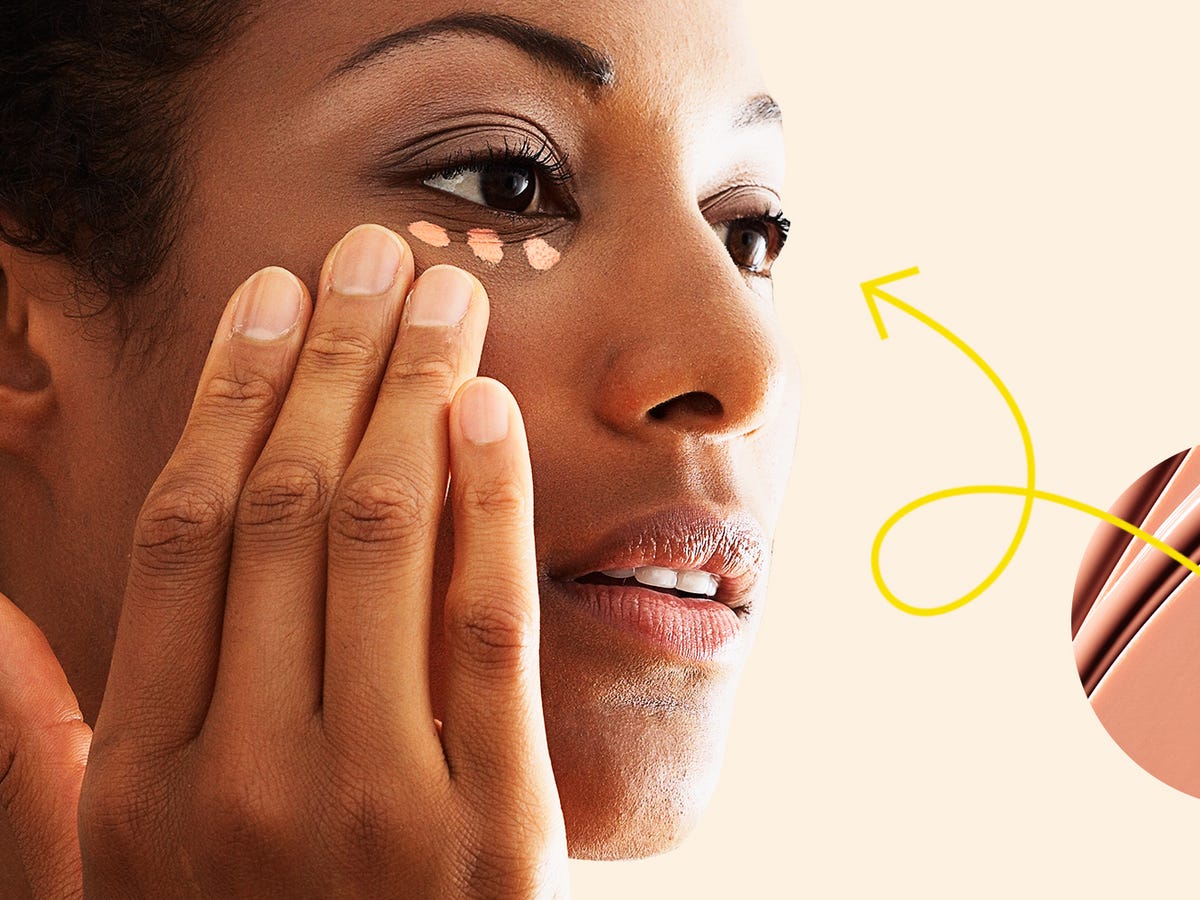
3. Apply a Tiny Amount
Put a little corrector on your ring finger. Warm it up by rubbing your fingers together. Then press or tap it into the dark spot.
Do not drag or swipe. Dragging pushes product into fine lines.
4. Blend Only the Edges
Lightly pat the edges so the color melts into your skin. If you can still see peach or green, you used too much. Wipe off a bit and try again.
5. Add a Little Concealer
Now press a thin layer of your normal concealer over the corrected area. You’ll need way less than usual because the color is already fixed.
6. Set Lightly (or Skip It)
Dust a tiny bit of powder only where the product creases. Skip powder on the rest. Less powder = more natural look.
5 Mistakes to Avoid
- Correcting the whole under-eye. Only fix the darkest patch.
- Skipping moisturizer. Dry skin = cakey, streaky makeup.
- Dragging product around. Always press and tap, never swipe.
- Using too much. If the corrector color is still visible, you went overboard.
- Piling on concealer without correcting first. The gray cast still shows through, and the extra product settles into lines.
What If I’m Not Sure Which Shade to Buy?
Start with a soft peach. It works for most fair-to-medium skin tones. If you have deeper skin, go for a richer peach or light orange. You can always add more coverage, but you can’t take color away easily.
The Bottom Line
The goal is that no one can tell you used a corrector. If it looks obvious, you used too much or spread it too wide. A little product in the right spot beats a thick layer everywhere, every time.
FAQ (for FAQPage schema)
What color corrector is best for mature skin? A soft peach for fair-to-medium skin. A richer peach or light orange for deeper skin. Green is only for redness.
Do I need a color corrector if I’m over 50? You don’t need one, but it lets you use less concealer, which means less product settling into fine lines. If you have visible dark circles or redness, it helps a lot.
Should I use color corrector before or after foundation? Before foundation and concealer. Correct the color first, then add your base on top.
Can I use a color corrector every day? Yes. It’s a normal part of a makeup routine. Just keep the amount small.
What’s the difference between a color corrector and concealer? A corrector uses color (peach, green, lavender) to cancel out discoloration. Concealer uses your skin tone to cover. You use the corrector first, then concealer on top


Comments are closed.