

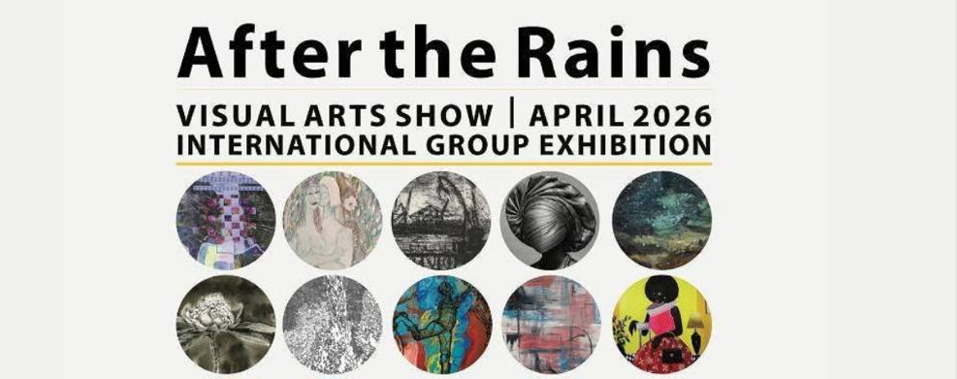
When the rain finally stops, what is left? That question sits at the heart of After the Rains, an international online group exhibition gathering twenty-seven artists for the whole of April 2026. Among them is Emmanuel Orisakwe Chizitere, a photorapher whose canvases refuse easy comfort, holding tension and hope in the same breath.
We caught up with him to talk process, the exhibition’s theme, and what it means to make art for a world still drying off.
La Mode: When you first heard the title “After the Rains,” what came to mind?
Emmanuel: Immediately, I thought about light. The specific quality of light that follows heavy rain, that strange luminosity where everything is saturated and raw at the same time. As a fine art photographer, you are always chasing conditions, and that post-storm window is one of the most alive moments you can put in front of a lens. But beyond the literal, I thought about aftermath as an emotional state. That suspended feeling of not quite knowing what shape the world will take now that something has passed through it.
“Post-storm light is one of the most alive moments you can put in front of a lens. The world is saturated and raw and completely itself.“
La Mode: Tell us about the specific work you’ve brought to this exhibition.
Emmanuel: The image I’m showing sits firmly within my fine art practice which means it’s not documentary, not photojournalism. The photograph is constructed with intention: composition, light, subject, and post-processing all serve a single idea. I’m working with the tension between stillness and residue, what a scene looks like when the drama has just departed. There is something present in the frame that hasn’t decided yet what it is. I want viewers to feel that uncertainty as something beautiful rather than unsettling.
La Mode: Fine art photography still has to argue for its place alongside painting and sculpture in some quarters. How do you think about that?
Emmanuel: I think that conversation is mostly over, honestly, at least in serious art spaces. The camera is a tool just as the brush is a tool. What matters is the intention behind it and the vision that directs it. A fine art photographer is making decisions at every stage: what to include, what to leave out, how light falls, what the image does to time. The fact that a machine is involved doesn’t diminish the authorship. If anything, the constraints of photography, you can only work with what exists in front of you make the art more demanding in some ways, not less.
La Mode: How does your Nigerian background and visual memory inform what you photograph?
Emmanuel: Profoundly. The way I read colour, the kind of light I’m drawn to, the subjects I find worthy of attention, all of that comes from somewhere. Growing up in Nigeria gives you a specific relationship to contrast: intense light, deep shadow, very little middle ground. That trains the eye differently. I find I’m often working with that same drama even when I’m shooting somewhere else entirely. The visual instincts you form early stay with you. They become the grammar beneath everything you make.
“The visual instincts you form early stay with you. They become the grammar beneath everything you make even when you’re far from where you learned them.“
La Mode: What does participating in an international virtual group show mean to you?
Emmanuel: It matters enormously. The virtual format removes geography as a gatekeeping force, my work can sit beside that of Agata Henderson, Lior Locher, Deborah Abosede Ibeme, and 24 others without anyone having to be physically present in the same city.
For artists based outside the traditional Western art market centres, that kind of access is significant. It also means the show is genuinely international in character, not just nominally. You encounter work shaped by completely different environments and see what a single theme does across all of them.
La Mode: What do you want someone to experience when they encounter your photograph in this exhibition?
Emmanuel: I want them to pause. Online viewing encourages speed, and I understand that there is so much work to see. But fine art photography rewards stillness. I want someone to spend enough time with the image that they begin to notice what isn’t immediately obvious: the way the light behaves in a corner of the frame, the detail that suggests a story the image won’t fully tell. If they leave the screen still thinking about it still trying to resolve something then the photograph has done its work.
La Mode: As April closes, what’s next for your practice?
Emmanuel: I’m developing a new body of work that takes the threshold idea further images made at liminal times of day and in transitional spaces. I’m also thinking more seriously about scale and print: there are things that happen to a photograph when it becomes very large that change the viewer’s relationship to it entirely. Being part of After the Rains has sharpened some of these directions for me. Seeing my work in genuine international company always clarifies what I’m actually doing and what I want to do next.
About the Exhibition
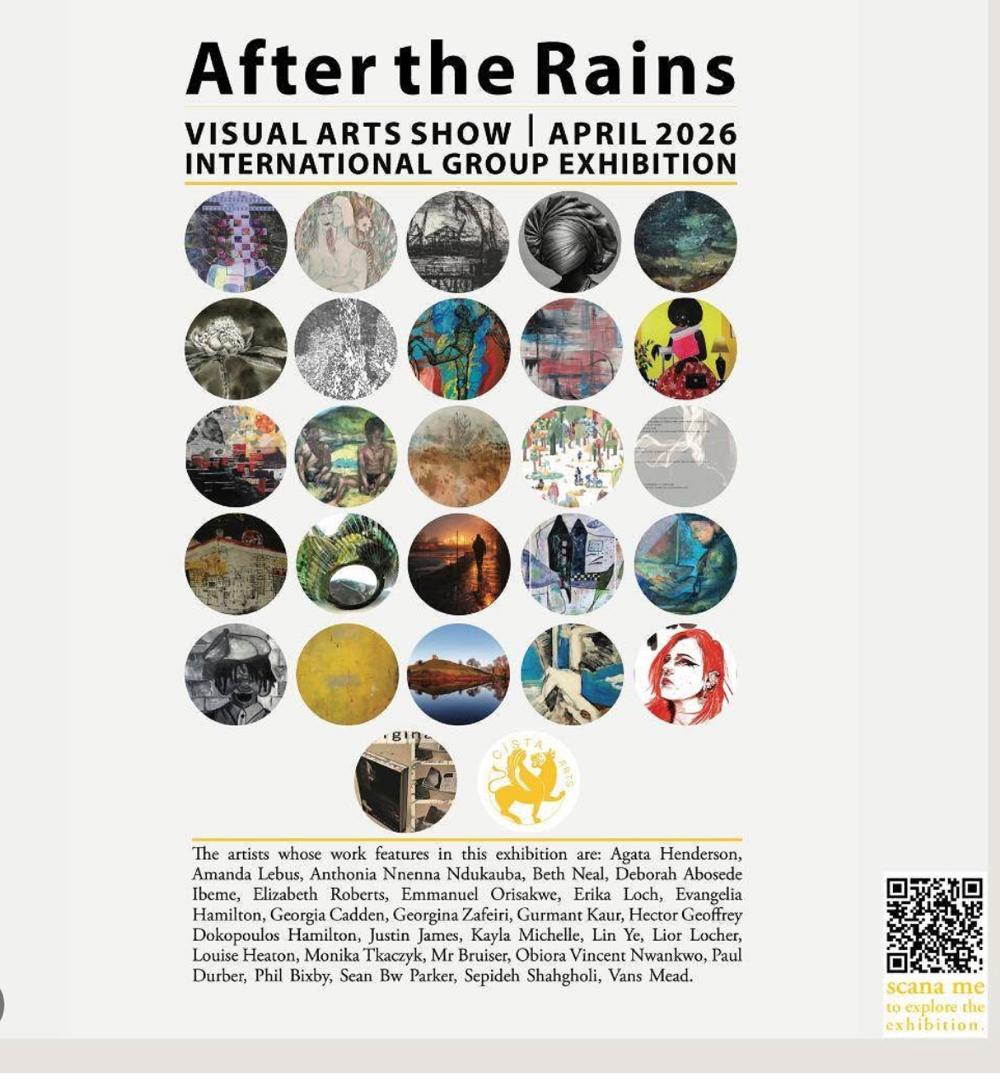
After the Rains is a virtual international group exhibition running 1–30 April 2026, organised by Origina and Costa Arts (UK).
The show features 27 artists: Agata Henderson, Amanda Lebus, Anthonia Nnenna Ndukauba, Beth Neal, Deborah Abosede Ibeme, Elizabeth Roberts, Emmanuel Orisakwe, Erika Loch, Evangelia Hamilton, Georgia Cadden, Georgina Zafeiri, Gurmant Kaur, Hector Geoffrey Dokopoulos Hamilton, Justin James, Kayla Michelle, Lin Ye, Lior Locher, Louise Heaton, Monika Tkaczyk, Mr Bruiser, Obiora Vincent Nwankwo, Paul Durber, Phil Bixby, Sean Bw Parker, Sepideh Shahgholi, Vans Mead.
Scan the QR code on the exhibition poster to explore the full show online.


Comments are closed.