


Owen Cooper just had his career-defining moment. At the 2025 Emmys, the young actor took home Best Actor for his haunting role in Netflix’s Adolescence—a series that doesn’t shy away from the darker corners of boyhood, masculinity, and the internet’s influence.
In the show, Cooper plays Jamie Miller, a 13-year-old boy whose life spirals after he’s arrested for the murder of a classmate. What starts as a whodunnit quickly unfolds into something far more urgent: an unflinching look at how the “manosphere”—those corners of the internet breeding misogyny, toxic masculinity, and radical ideologies—can warp the minds of young boys searching for identity and belonging.

ABOVE: Scenes from Netflix’s Adolescence
The timing couldn’t be sharper. Adolescence is Netflix’s most-watched limited series ever (66 million views in its first two weeks), and it swept the Emmys with six trophies. But beyond the accolades, it’s tapping into a cultural panic shared by parents, guardians, and educators worldwide: what happens when kids get their crash course in “manhood” from the wrong teachers?
Take figures like Andrew Tate—currently facing serious allegations of rape and human trafficking—whose brand of toxic messaging disguises itself as “self-improvement.” To a teenage boy desperate to figure out life, those mixed messages—health tips laced with misogyny—can feel like gospel. And that’s where the danger lies. The manosphere has gone from shadowy forums to full-blown mainstream pipelines, dripping toxic narratives into everyday feeds.

ABOVE: Scenes from Netflix’s Adolescence
But here’s the thing: boys aren’t just passive sponges. They’re asking questions. “What does it mean to be a man?” And the silence in schools isn’t helping. According to the Equal Opportunities Commission, 60% of secondary schools don’t teach informed consent—a knowledge gap that leaves adolescents looking for answers online, where “manhood” is too often sold as dominance and misogyny.
Students are curious, eager, and often brave enough to ask real questions about dating, sex, and relationships. The problem? They’re not getting safe, structured spaces to explore those questions. Instead, their education comes via violent porn, radical influencers, or not at all. And when that’s the syllabus, harm is inevitable.
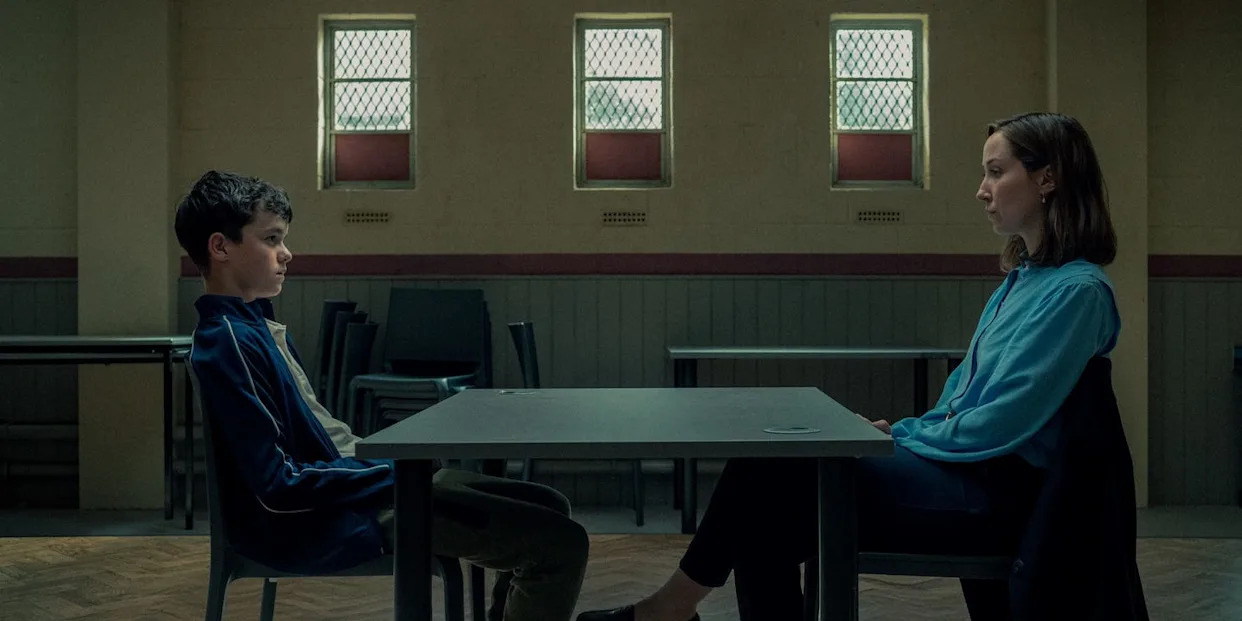
ABOVE: Scenes from Netflix’s Adolescence
So how do we fix it? It starts with conversations—honest ones. Parents, guardians, and educators need to normalize talking about consent, respect, and relationships without shame. Foxworth recommends:
- Make it safe. No judgment, no shaming. Kids need to know their questions won’t earn them ridicule.
- Lead the dialogue. Don’t wait for them to ask—start the conversation yourself.
- Be direct. Especially for neurodiverse adolescents, clarity matters more than euphemisms.
- Respect identities. Don’t assume labels; today’s kids are more accepting than most adults give them credit for.
For parents, that also means drawing boundaries: limiting screen time, keeping devices out of bedrooms, and being upfront about monitoring internet use to maintain trust.
The lesson from Adolescence is clear: representation can spark awareness, but awareness without action changes nothing. If we want healthier boys, safer communities, and a culture of true consent, then these conversations can’t be optional. They’re as vital as math, science, or history—maybe even more so.
Because in a world where toxic masculinity is just a scroll away, silence isn’t neutral. It’s dangerous.



Comments are closed.