

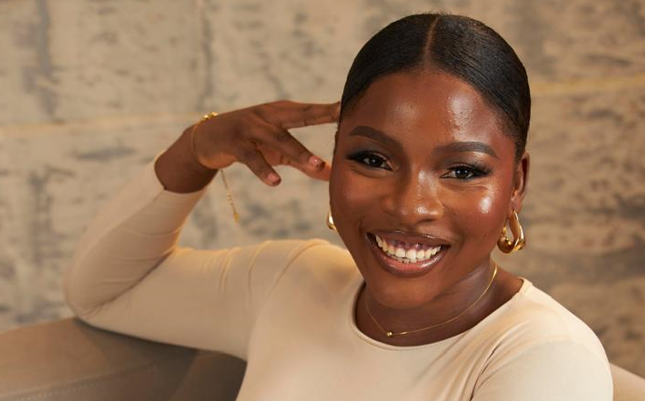
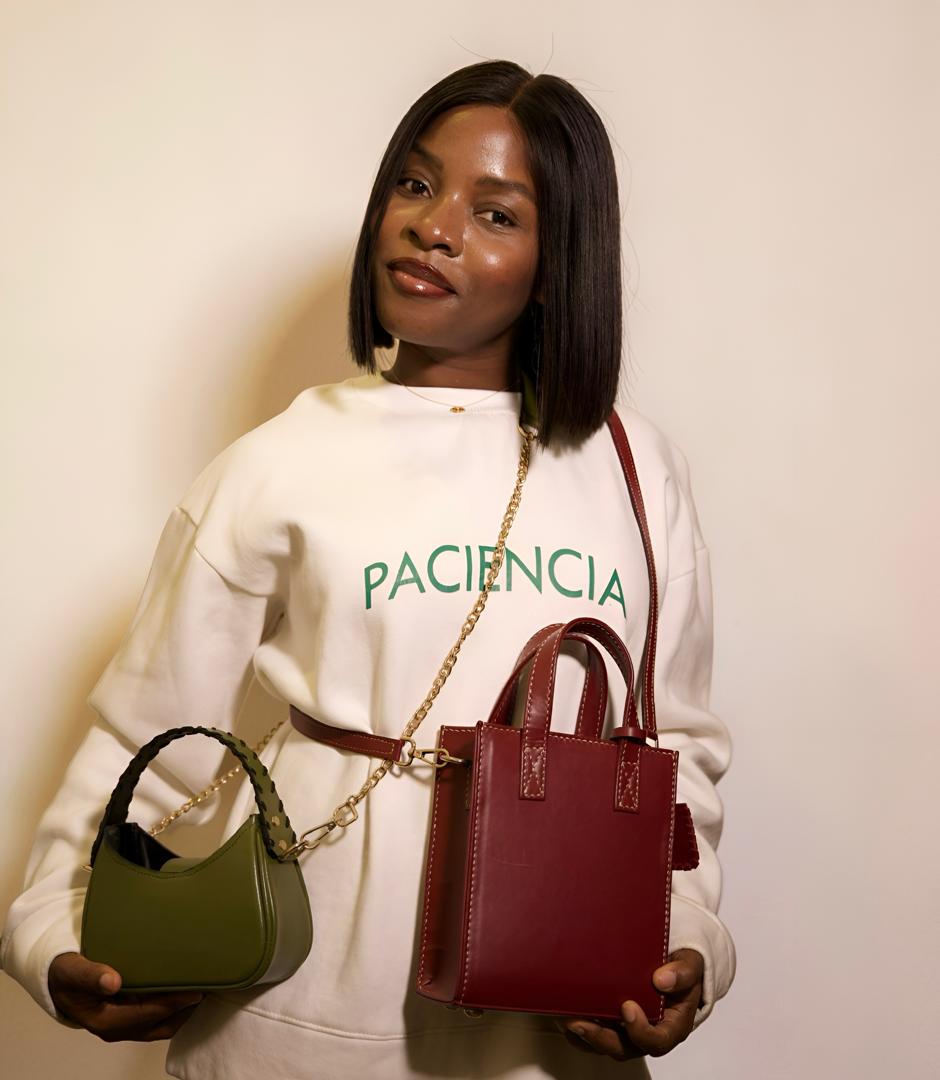
A lot has changed since I last spoke with Joy Fache James. Paciencia won the Wema Bank MSME Grant at Lagos Leather Fair in June — one of three from sixty-six competing brands, covered by six national publications in the same week. The brand was in London for Fashion Week last September, in Toronto for Africa Fashion Week earlier this year. She has spoken at fashion weeks in Abidjan, Dakar, and at the Abryanz Style and Fashion Awards. The brand that was two years old when we last spoke is now four, and the accumulation of that time is visible both in how she presents herself, which is exactly the same, and in the quality of certainty that runs through everything she says.
We met again to talk about the bigger questions. What African luxury actually means. What Nigeria contributes to the global design conversation. What it looks like to build something in Lagos and take it to London and not change a thing.

La Mode: The Wema Bank grant, one of three from sixty-six brands. How did that land for you?
Joy: I would say it landed as confirmation rather than discovery.
The work had been building for four years. The design language had been consistent. The quality standard had held across every collection. So when the grant arrived, I didn’t feel much surprised, per say, if I must be sincere. It was more like a recognition for me.
In fact, what moved me more than the grant itself was the process. KPMG administered the selection. The criteria were specific and publicly stated. The judges were independent professionals. Being confirmed by a genuinely rigorous process means something different from being celebrated by a supportive one. Anyone can celebrate you. Not everyone can assess you and find you sufficient.
LA Mode: Last September at the London Fashion Week, you were in a room with the international press and buyers. What did you learn?
Joy: That specificity travels further than I was sometimes told it would.
There is a version of advice that African designers receive when they are preparing for international platforms. Stuffs like adjust the work, soften the most culturally specific elements, make it legible to an audience that does not carry the same context. I did not do all of these. I brought the full brand, the Nigerian leather with my handwoven signature, the philosophy, the design language exactly as it exists in Lagos. And the room responded to precisely that. I didn’t have to let them respond to a version of Paciencia calibrated for international consumption. I gave them the opportunity to respond to the actual thing, and they genuinely did.
What I learned is that the people worth reaching, you know, the buyers and collectors and press who matter, do not want a diluted version of an original idea. They want the original. Dilution is for brands that are not confident in what they have. I am confident in what Paciencia has.
La Mode: Oh wow just wow! That’s incredibly insightful to hear. Aside from the London Fashion show, you have also been speaking at fashion weeks across the continent, Abidjan, Dakar, the Abryanz Awards. What conversations keep coming up?
Joy: Access and infrastructure. Every time, in every city.
The creative talent on this continent is extraordinary. I encounter designers at every event who are doing work of genuine quality, have real design intelligence, real craft standards, real philosophical positions about what they are building. So talent is not the problem. The problem is what surrounds the talent. Access to capital. Access to the institutional relationships, with buyers, with press, with the educational frameworks. You know, everything that allows creative talent become a sustainable creative practice.
Now, this is exactly why I came up with the She Creates Fashion Initiative. This initiative matters to me as much as it does. It was born to bridge the gap between talent and access to practical infrastructure, business knowledge, and information, with a focus on women.
La Mode: That’s nice. So what does African luxury actually mean to you? Not as a marketing category but as a genuine design proposition.
Joy: It means exactly what luxury has always meant, produced from specifically African creative and material intelligence.
The framing I resist is the one that positions African luxury as a subset or as a regional variation of the real thing, interesting and culturally significant but peripheral to where luxury is actually made. I reject that entirely. What Paciencia is building is not African luxury in the qualified sense. It is luxury and that’s on period.
The African context is not the qualifier. It should be seen as the source. And the source is as valid, as deep, as capable of producing world-class luxury objects as any European atelier.
La Mode: You have said before that Lagos taught you something specific about building.
What exactly?
Joy: Yes. Which is, that if you can build something real here, you can build it anywhere.
And it does reference what I said in my last response.
Also, Lagos does not give things away. It does not extend patience to work that is not ready, does not sustain brands that are not genuinely prepared for scrutiny. The infrastructure is thin. The capital is scarce. The conditions for building a luxury accessories brand here are objectively harder than they would be in London or Paris.
And yet I built Paciencia here. From here. Without relocating. Without waiting for better conditions. The design language, the craft standards, the international presence, the community initiative. All of it built in Lagos, under Lagos conditions.
A brand that has held up in Lagos will hold up anywhere. I know this because I have tested it. Aberdeen, Cheshire, London Fashion Week. The work did not need adjustment for any of those rooms. Because it was built to a standard that Lagos insisted on first.
That is the gift, even when it does not feel like one.


Comments are closed.