

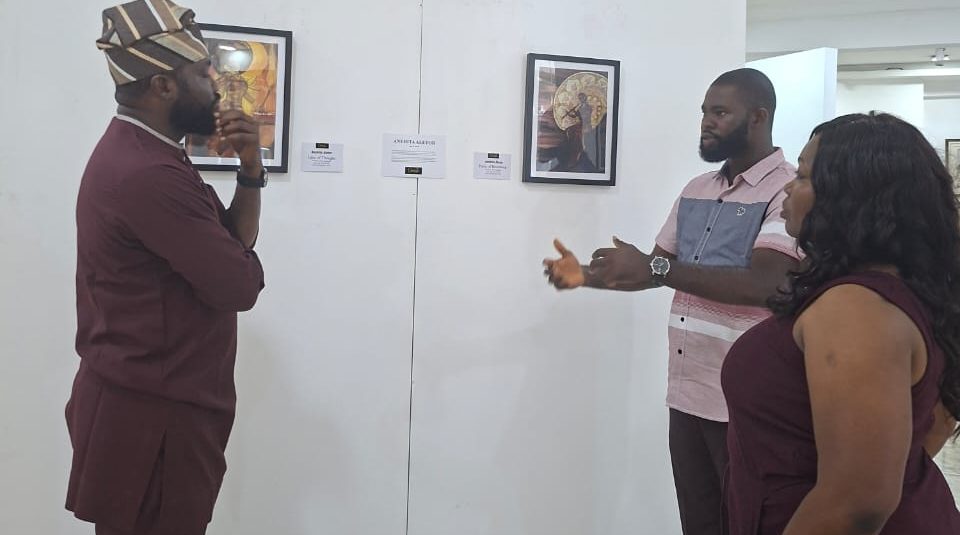
A reflection held in a fragment of glass. A body illuminated against darkness. Two figures standing side by side. Hands holding, reaching and supporting. A face meeting the viewer from the surface of water.
These encounters formed part of Layers of Seeing, a group exhibition at Orisun Art Gallery, Abuja, bringing together Ibrahim Kareem, Anehita Aletor, Ololade Oletubo, Samson Yusuf and Deborah Ibeme.
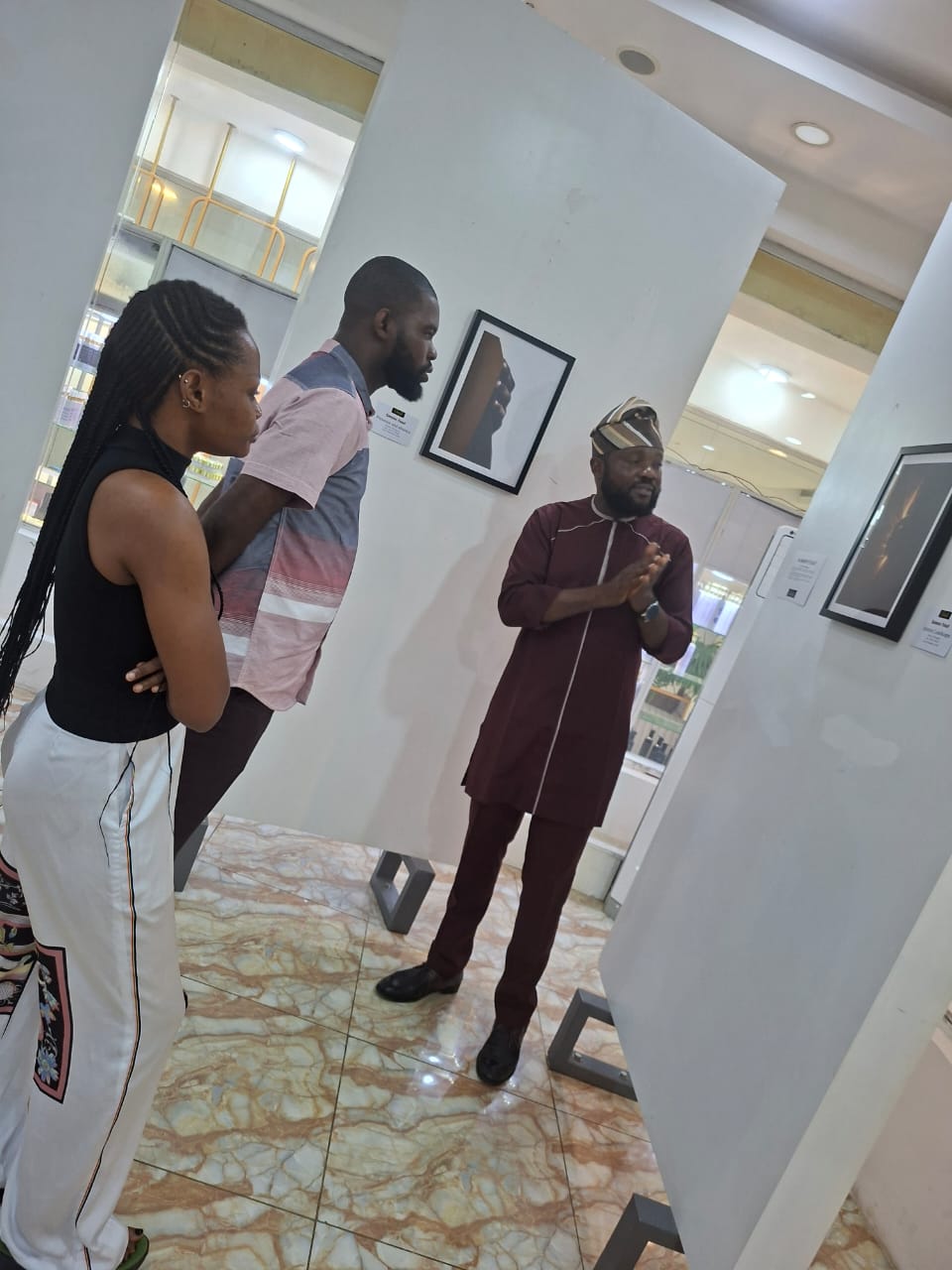
The exhibition was built around a familiar but often overlooked truth: what we see is shaped by what we have lived.
Rather than following a single visual style, Layers of Seeing allowed each artist to approach that idea independently. Photography, painting and drawing moved alongside one another, creating a varied exhibition in which the human figure repeatedly appeared as a place where memory, identity, vulnerability and hope could be examined.
For Ibrahim Kareem, attention turned towards moments that might ordinarily disappear into everyday life. His fine art photographs The Unnoticed and Thresholds used intimate compositions and carefully controlled light to make the seemingly ordinary feel significant. His work asked what becomes visible when we give ourselves enough time to notice.
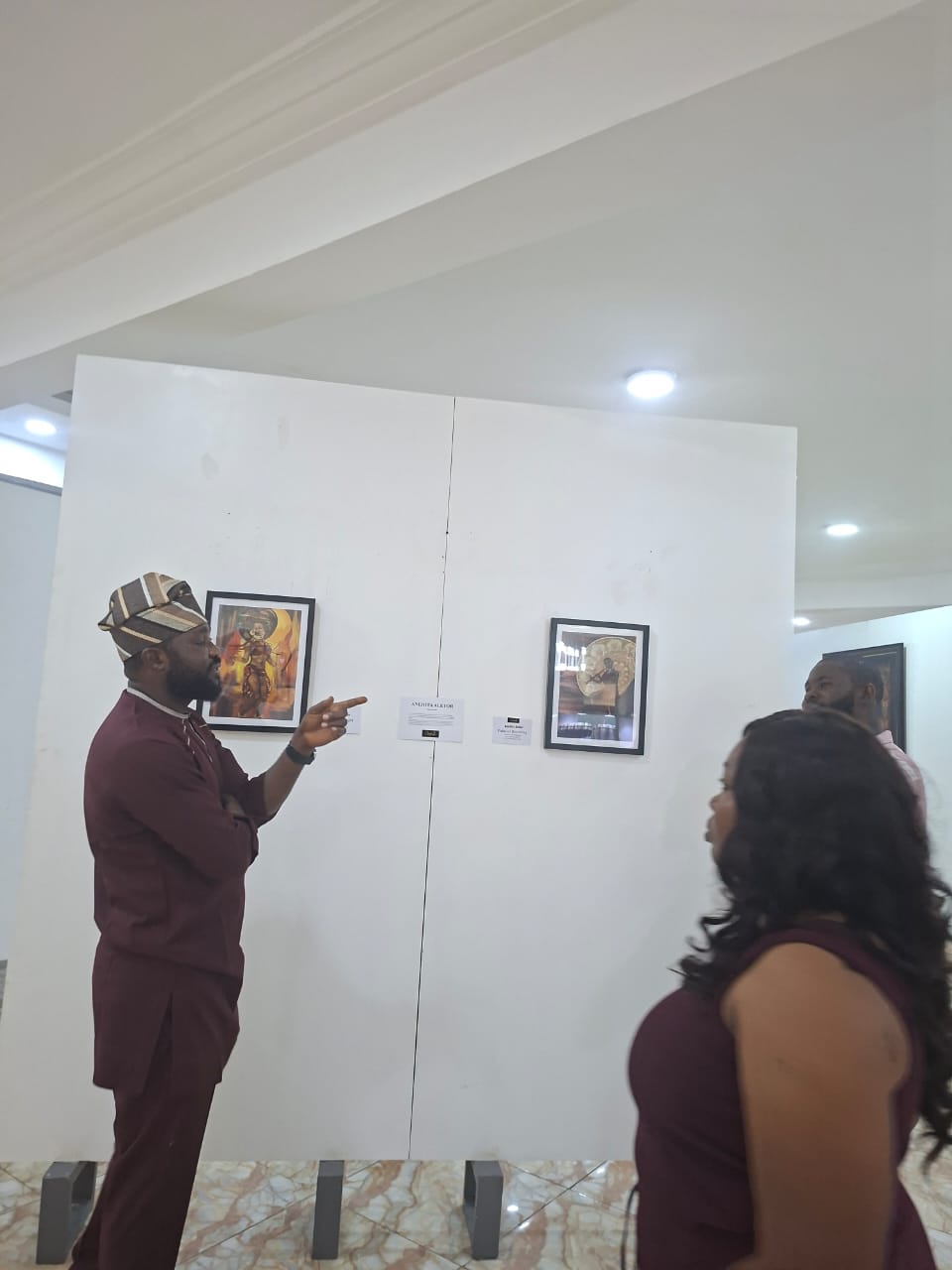
Ololade Oletubo’s Paths of Becoming and The Journey of Hope brought another rhythm to the exhibition. Through painting and drawing, Oletubo explored people in relation to movement, community and possibility. His expressive treatment of the figure suggested that becoming is not a fixed destination, but a process shaped by experience.
In Samson Yusuf’s Presence and Absence and Interior Landscape, photography became a means of approaching memory. Light, shadow and partial visibility created images that appeared to exist somewhere between the tangible and the remembered. The photographs invited viewers into an emotional space where absence could feel as present as the things directly before them.
Deborah Ibeme explored physical and psychological connection in Shifting Perspectives and Fragments of Time. Through tightly framed bodies and evocative portraiture, her photographs considered how relationships, environments and changing circumstances influence the ways people understand themselves.
Anehita Aletor’s contribution added its own perspective to this wider examination of human experience, strengthening an exhibition that deliberately allowed different artistic languages to meet without requiring them to become the same.
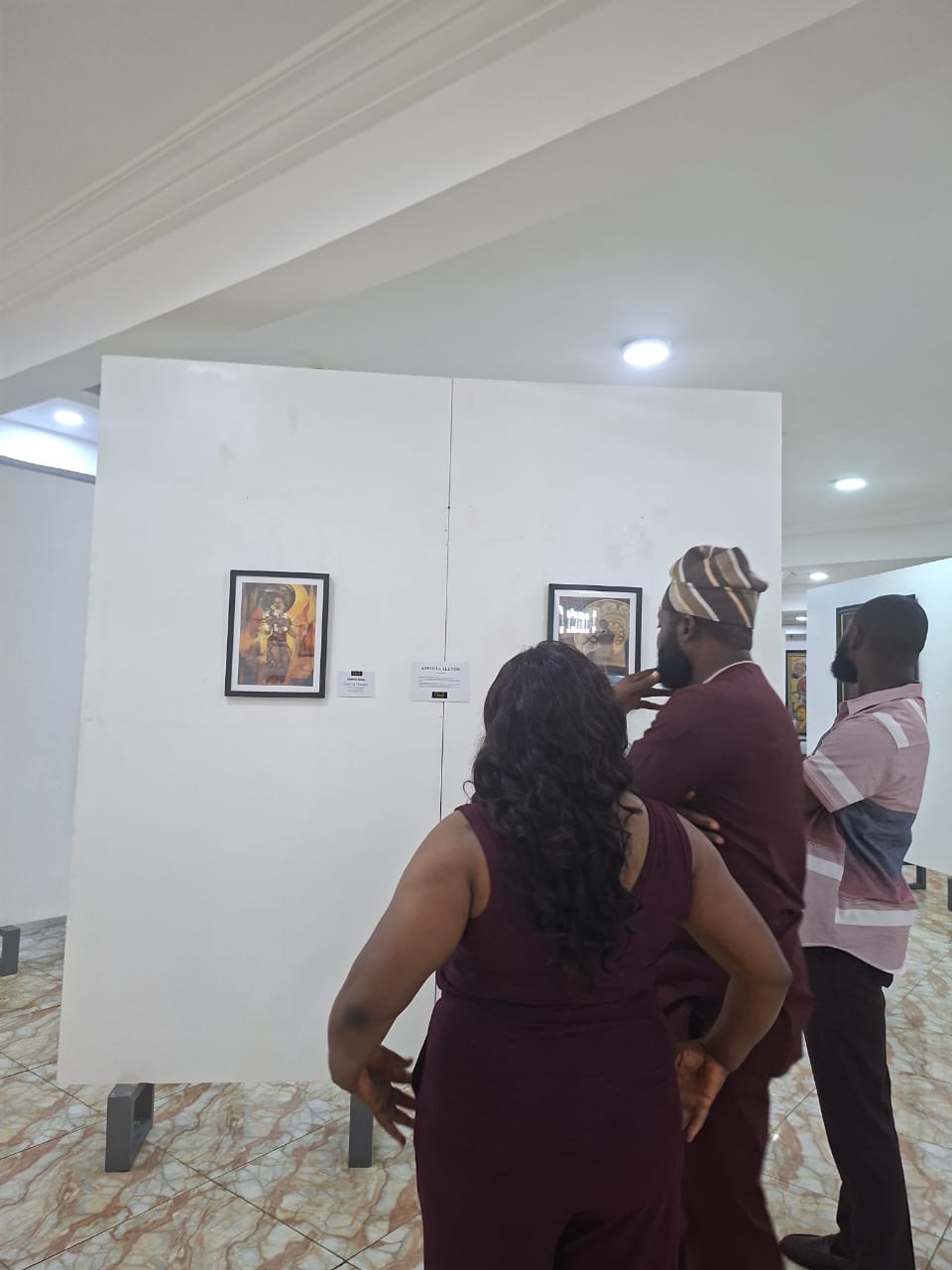
The works were individual, but their concerns frequently crossed paths.
Throughout the exhibition, the body carried meaning. Hands communicated without words. Faces revealed and concealed. Light altered the emotional character of a scene. Figures appeared not simply as subjects to be observed, but as people carrying histories that could never be fully understood from the surface alone.
This made Layers of Seeing as much about the audience as it was about the artists.
Visitors were encouraged to bring their own experiences to the works. An image that suggested resilience to one person could speak of uncertainty to another. A gesture might be read as protection, dependence, affection or strength. The exhibition left room for those differences.
That openness gave the show its pulse.
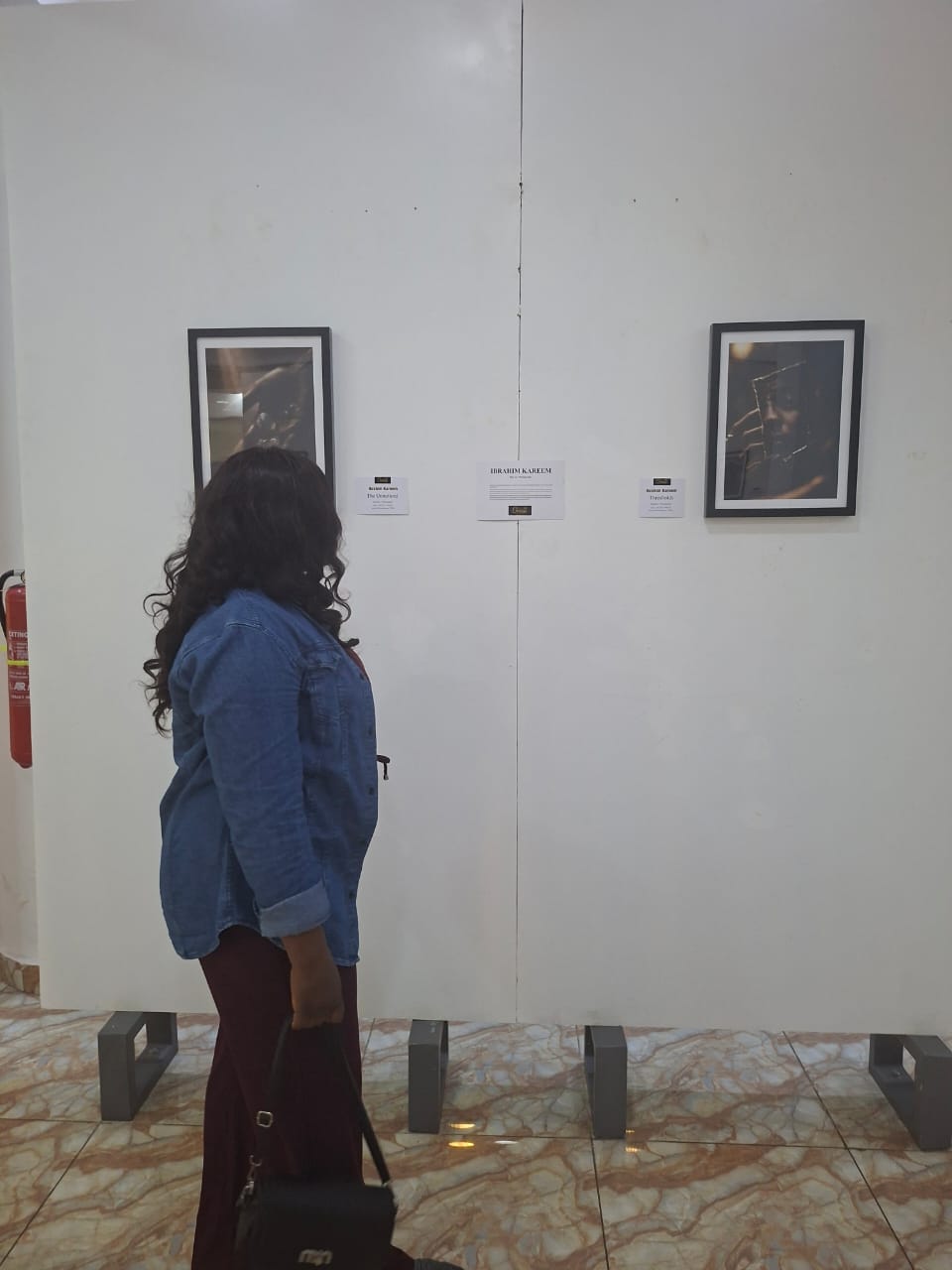
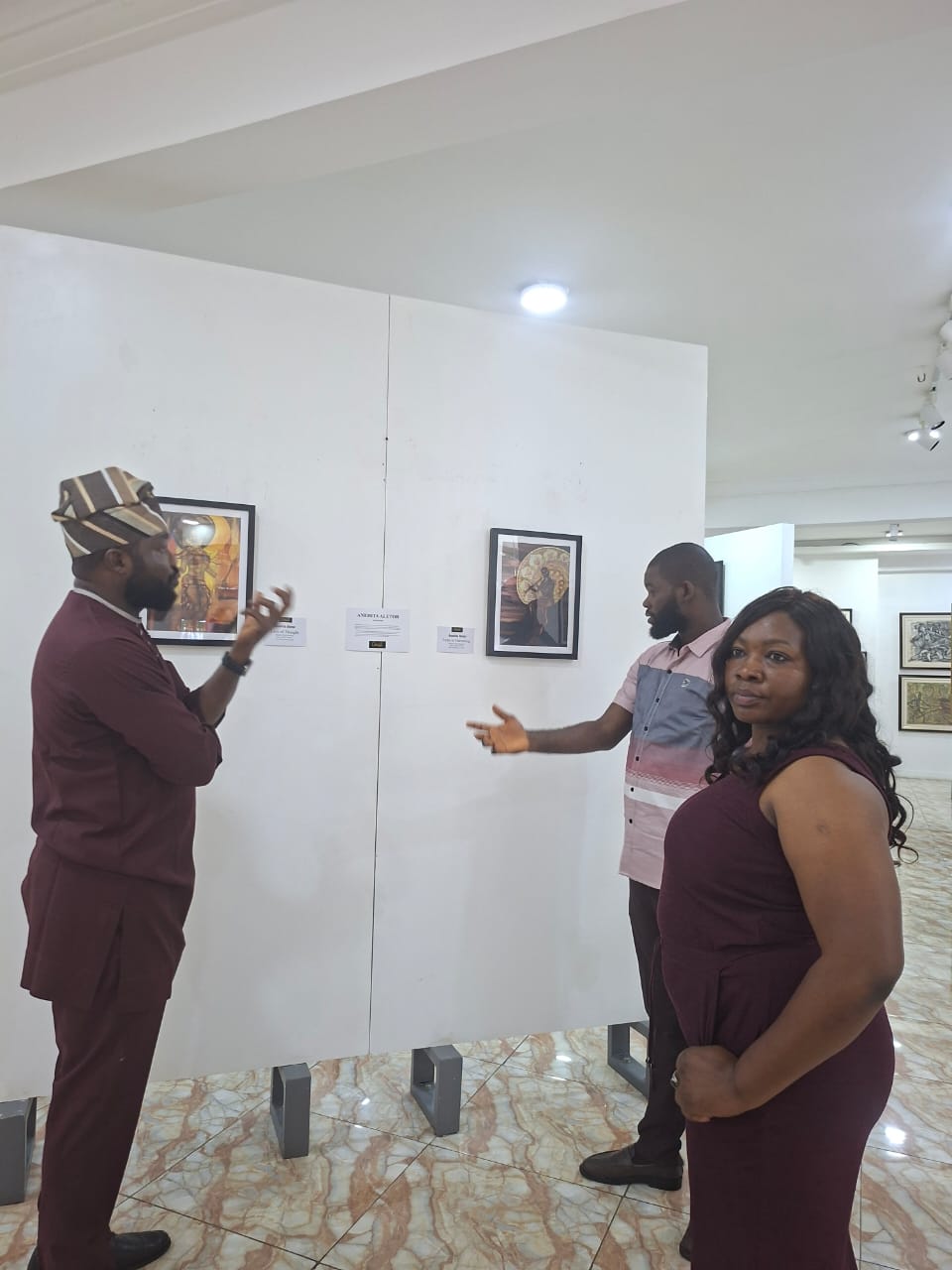
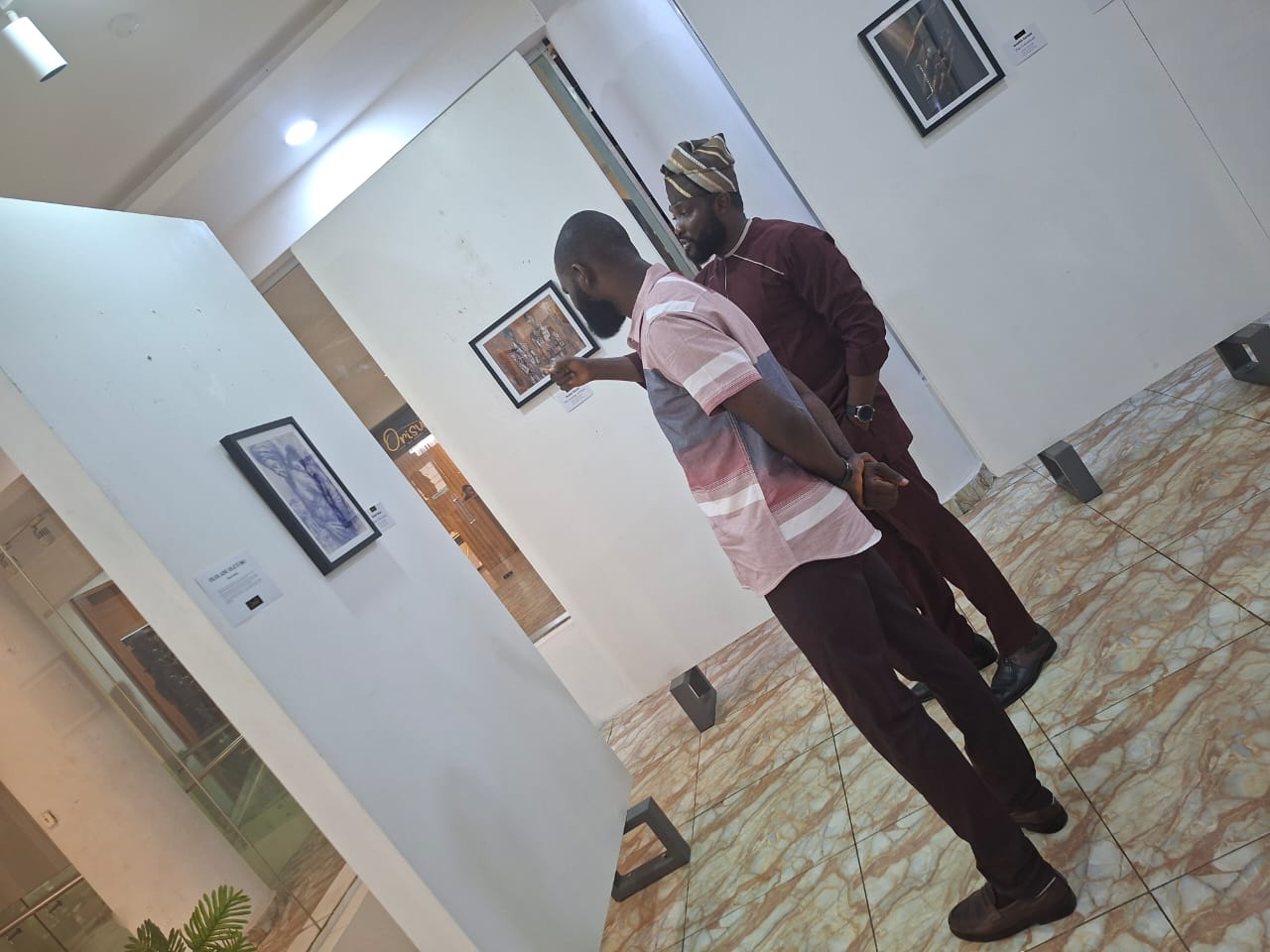
At a time when photographs and visual information are encountered in an almost continuous stream, Layers of Seeing offered a different pace. It encouraged sustained attention and reminded viewers that an image can become more complicated and more rewarding the longer one remains with it.
The exhibition took place on 29 August 2026, at Orisun Art Gallery, 1st Floor, Tropic Galleria, by Grand Square, Muhammadu Buhari Way, CBD Abuja, Nigeria.
By bringing five different practices into one space, Layers of Seeing demonstrated that there is no single way to represent human experience. We see in layers: through memory, through emotion, through culture, through other people and through the changing understanding we have of ourselves.
Sometimes, a second look changes everything.



Comments are closed.